
Updated Sept 2026
Dysautonomia and Postural Orthostatic Tachycardia Syndrome (POTS) cases are on the rise, largely as a result of COVID. Are you prepared to support these individuals? More than 1% of the population is affected, and 30–80% of people with long COVID may develop POTS—a substantial number of people in need of care. Since diet and lifestyle adjustments are the primary approach to managing POTS, Registered Dietitian Nutritionists (RDNs) are frequently the professionals working with POTS patients and are well-positioned to recognize patterns and offer informed guidance.
Many patients rely on online support groups for information, often because healthcare providers lack the answers they seek. We can and should do better.
These handouts contain all the essentials to help your patients navigate their diagnosis, implement effective diet and lifestyle strategies, and equip you to answer the typical questions new POTS patients are likely to ask.
Patients want to understand what POTS is, how it impacts their body, and what they can expect moving forward.
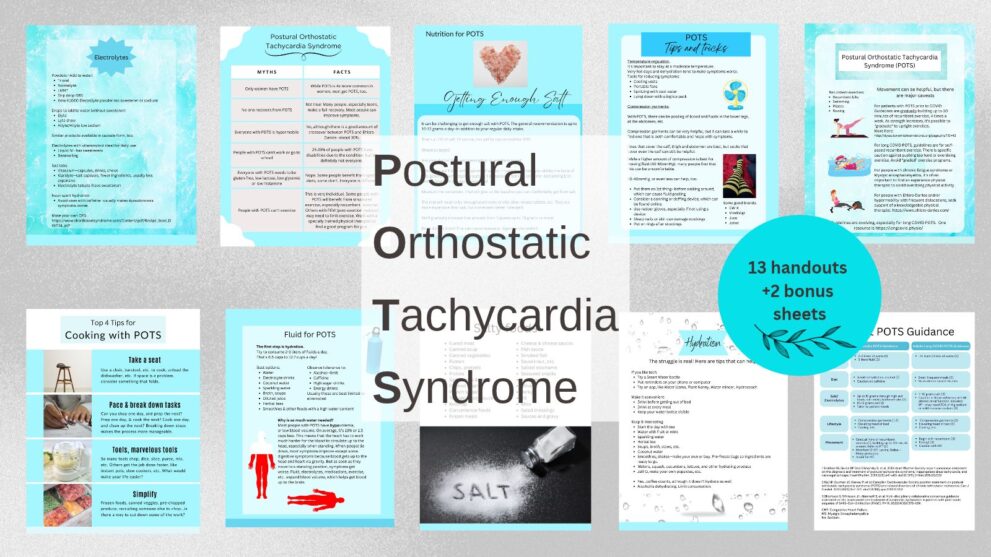
This kit covers:
- The physiology behind the electrolytes, fluid, compression, movement, recommendations. Patients are more likely to follow suggestions when they understand the *why* and *how* it will help them feel better.
- Fluid–how much, strategies, etc.
- Salt/electrolytes–how, how much, etc.
- Brands of electrolytes
- Diet changes that may be supportive
- Types of exercise that can be helpful, as well as caveats and cautions
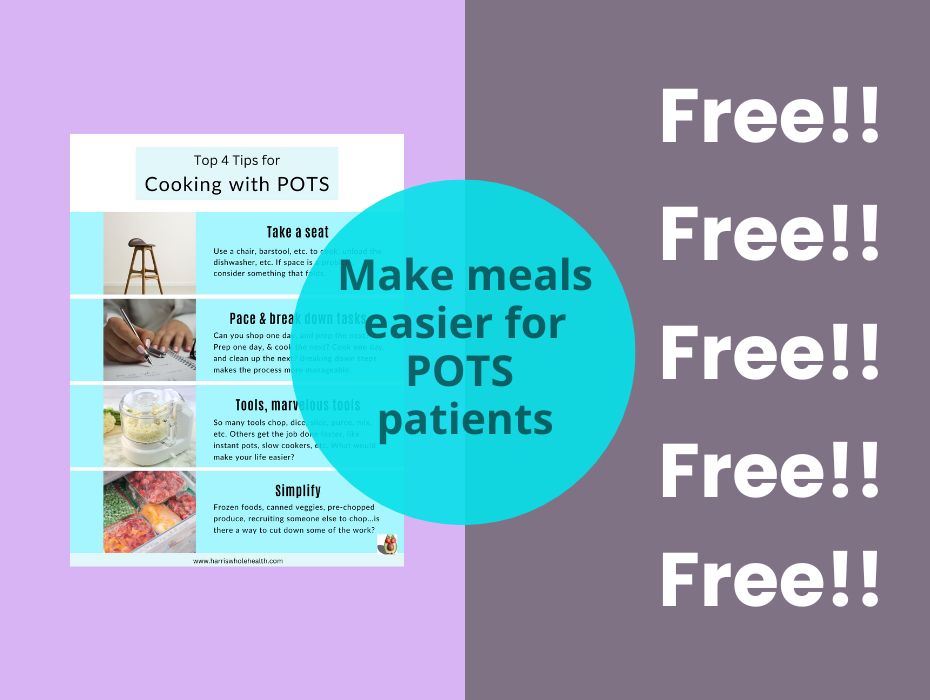
- Strategies and adaptive equipment can help make cooking and prepping easier.
- …and resources for the RDN to earn more about the types of POTS, testing, places to learn more.
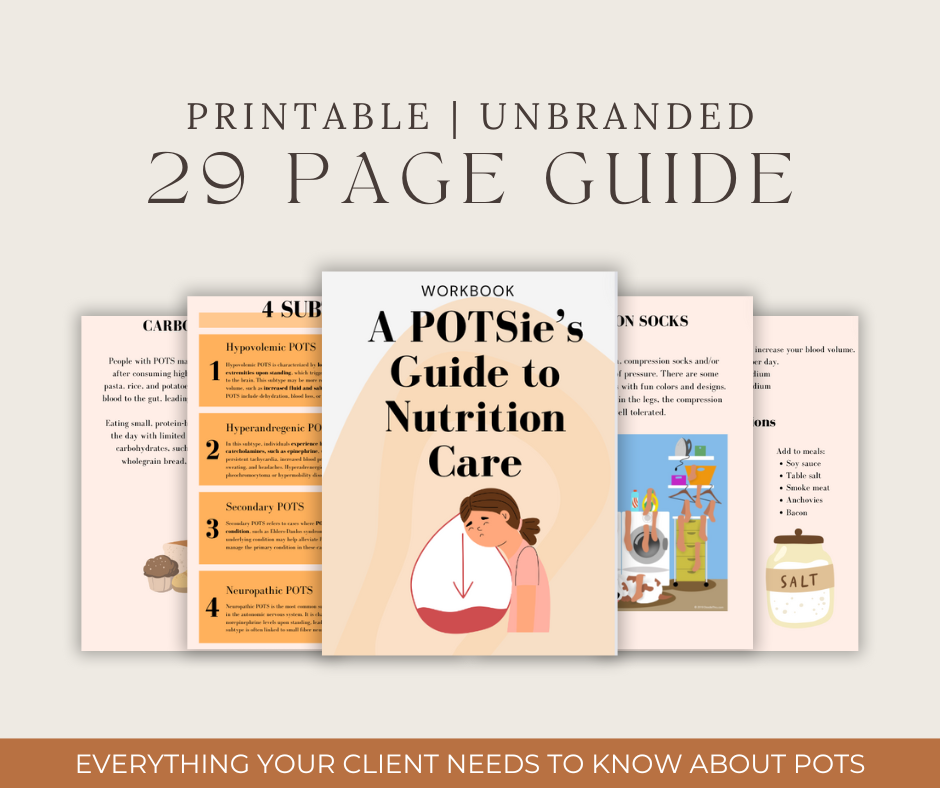
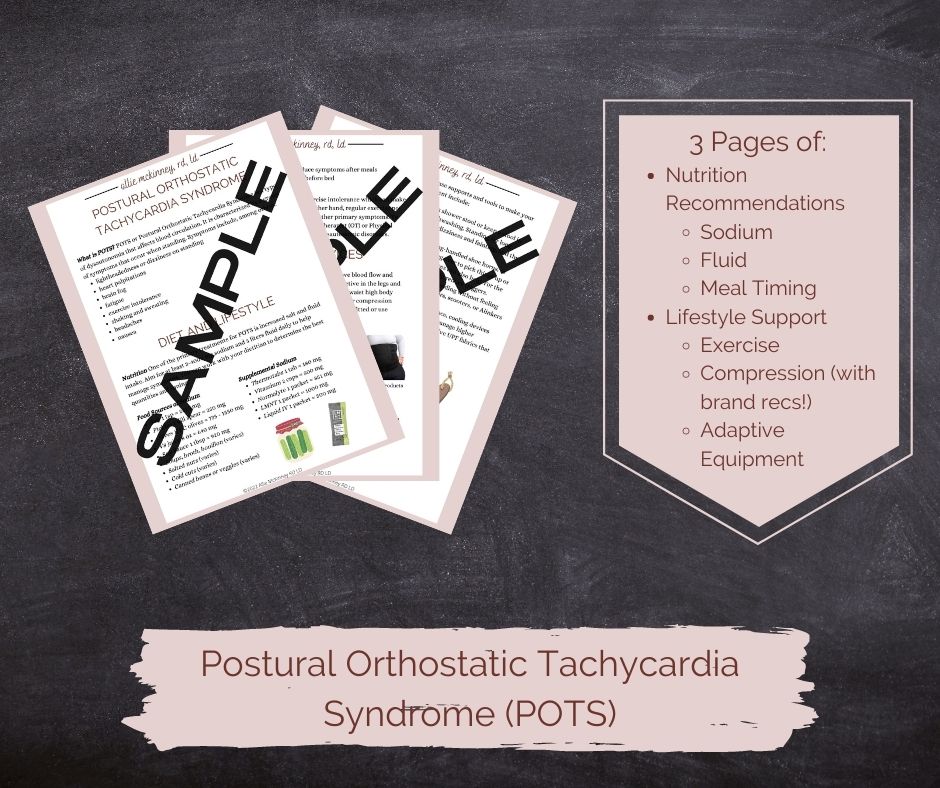
This contains details on type of foods, meal size and spacing, exercise suggestions for POTS with specific guidance based on whether the client has long COVID POTS, Ehlers-Danlos, myalgic encephalomyelitis, etc., amount of salt and other electrolytes with practical suggestions, brands of electrolytes including ones to avoid, brands of compression garments and cooling tools and more.
Some of this research is *just* out in 2025, so you are getting the latest info!
- POTS and Diet
- POTS Basics and Exercise (2 page)
- Fluids for POTS
- Electrolytes
- Salt needed for POTS
- POTS Tips and Tricks
- Tips for Cooking with POTS
- POTS Myths and Facts
- POTS guidelines for adults, both for POTS and Long COVID POTS
- Simple Hydration Tips–you may find yourself using these suggestions and tools for a range of patients!
- Background info for RDNs (not intended for patients)
These 11 handouts are NON-BRANDED
PLUS added bonuses— extra 2 pages of references and resources for RDNs to learn more about POTS with FAQ AND a 2 page handout on salty foods
Cheryl Harris, MPH, RD developed POTS in 2000 and has decades of experience managing symptoms and working with clients with POTS. Especially since COVID, she has actively worked to help people with POTS get the care they deserve, and to help health professionals do better. She taught on a POTS for Today’s dietitian in 2023 and also authored a paper in JAND on POTS published in 2022 to help advance awareness, which can be found here: https://www.sciencedirect.com/science/article/pii/S2212267222003422
Why are the handouts turquoise? Because turquoise is the color of dysautonomia awareness.
Looking for more?
- Histamine Intolerance and Mast Cell Diseases
- Gluten-free Essentials
- Gluten-Free Kit (basic)
- Gluten-Free Kit (expanded)
- Tummy tamers kit (100 pages!)
- The Spoonie Toolkit
- Low FODMAP Kit
- 50+ Low FODMAP meals
- Six Food Elimination Diet for EOE
You must log in and be a buyer of this download to submit a review.