
You’ve seen this client before.
They tell you they “know what to eat but can’t make it happen.” They skip meals. They eat the same three things. Their appetite is nonexistent during the day and ravenous at night. You’ve charted it. Maybe you’ve suggested meal prepping. Maybe you’ve referred to a dietitian and the referral went nowhere.
Here’s what nobody taught you in training: your neurodivergent client is navigating up to four neurological barriers to eating — and until someone names them, they’ll keep looking like “noncompliance.”
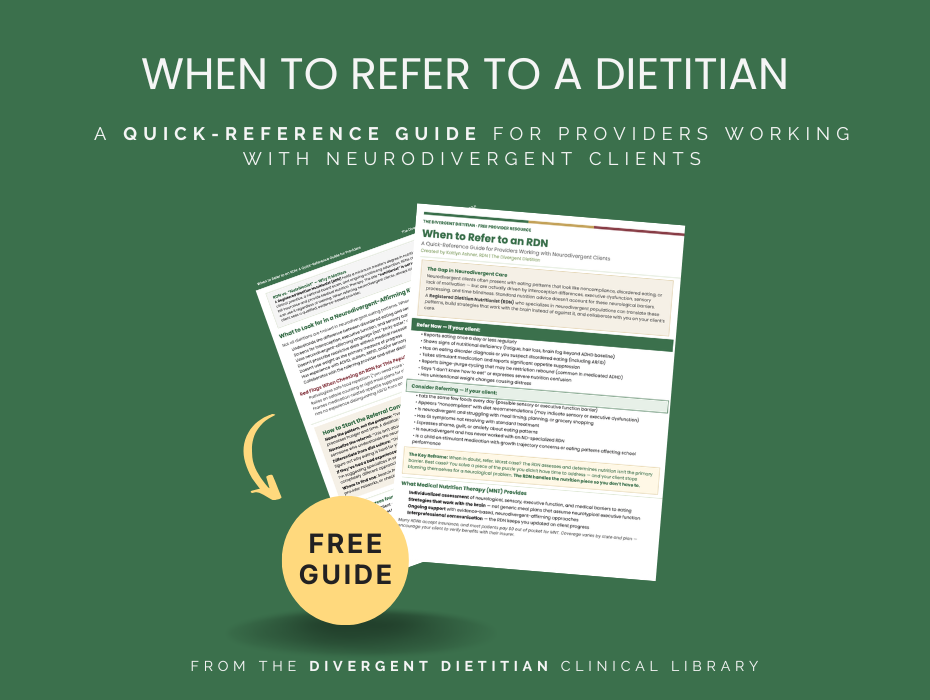
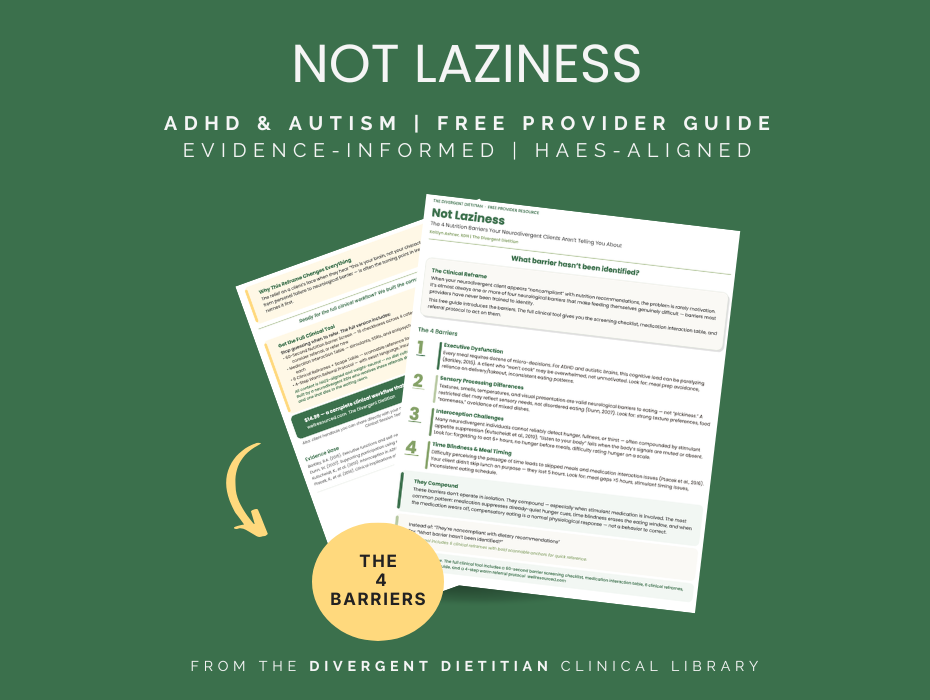
This 2-page guide names them, gives you recognition cues for each one, and replaces “they’re noncompliant” with a single question that changes your documentation, your treatment planning, and your relationship with the client sitting across from you: What barrier hasn’t been identified?
THE 4 BARRIERS (AND HOW TO SPOT THEM)
This isn’t a checklist or a screening tool — it’s the clinical framework that changes how you see every neurodivergent client’s relationship with food:
- Executive Dysfunction — why “won’t cook” usually means “can’t initiate the 47 steps cooking requires.” Look for: meal prep avoidance, reliance on delivery, inconsistent eating patterns.
- Sensory Processing Differences — why a restricted diet may reflect neurological needs, not disordered eating. Look for: strong texture preferences, food “sameness,” avoidance of mixed dishes.
- Interoception Challenges — why “listen to your body” fails when hunger signals are muted, often compounded by the stimulant medication you prescribe. Look for: forgetting to eat 6+ hours, no hunger before meals, difficulty rating hunger on a scale.
- Time Blindness — why your client didn’t skip lunch on purpose, they lost 5 hours. Look for: meal gaps exceeding 5 hours, stimulant timing issues, inconsistent eating schedule.
These barriers don’t operate in isolation. They compound — and the guide maps the most common interaction pattern you’ll recognize in your medicated ADHD clients, including why evening eating after medication wears off is a normal physiological response, not a behavior to correct.
Share this freely with your treatment team — the more providers who speak this language, the better the outcomes for your shared clients.
WHO THIS IS FOR
- Therapists who see neurodivergent clients struggling with eating and want to understand the neurological piece — not just label it
- Prescribers who want to understand how stimulants, SSRIs, and antipsychotics interact with these barriers — and when nutrition support would improve medication outcomes
- PCPs who need a framework for recognizing nutrition barriers they don’t have time to address in a 15-minute appointment
- RDNs who want a professional resource to share with the therapists and prescribers on their clients’ treatment teams
WANT THE FULL CLINICAL TOOL? ($14.99)
This guide introduces the barriers. The full tool gives you the workflow to act on them:
- 60-Second Nutrition Barrier Screen — 16 checkboxes across 4 categories with a scoring guide that tells you when to monitor, consider referral, or refer now
- Medication Interaction Table — stimulants, SSRIs, and antipsychotics mapped to nutrition impact AND what the RDN addresses for each
- 6 Clinical Reframes with bold scannable anchors for documentation and team communication
- Scope of Practice table — what an ND-affirming RDN provides vs. what an RDN does NOT replace
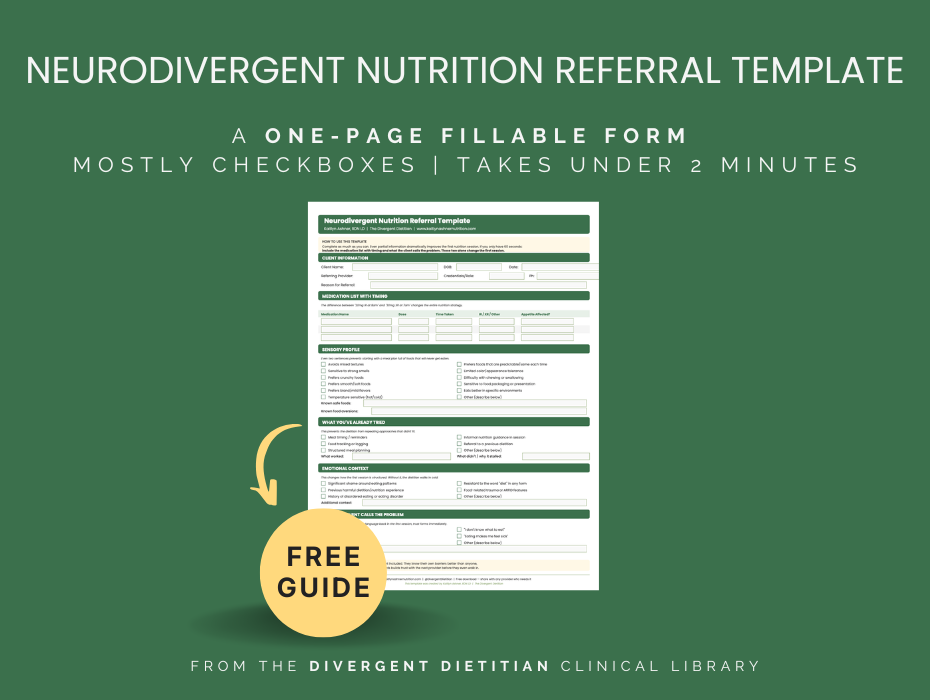
- 4-Step Warm Referral Protocol with exact language, insurance cost objection removal, and fillable RDN contacts section
→ Find the full Not Laziness Provider Education Tool in The Divergent Dietitian shop

ALSO FROM THE DIVERGENT DIETITIAN
Client handouts you can share directly with your neurodivergent patients:
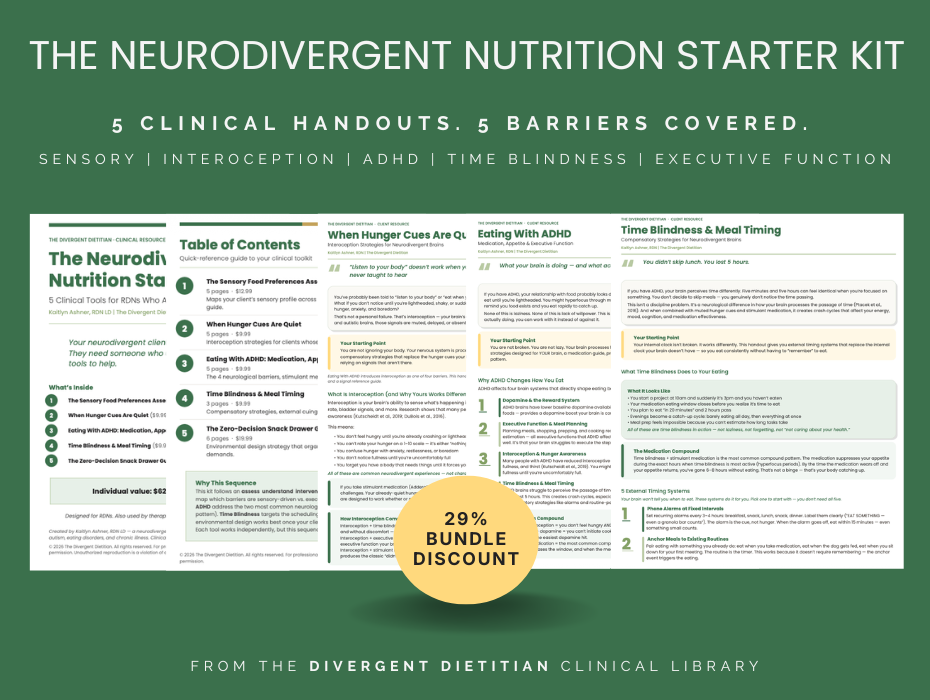
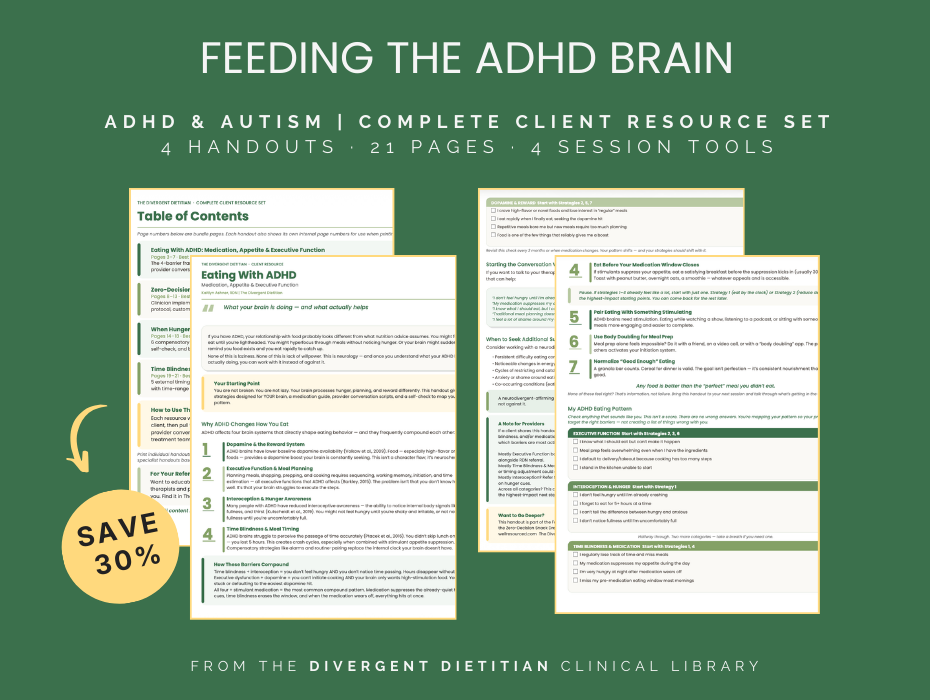
- Eating With ADHD: Medication, Appetite & Executive Function — $9.99
- Zero-Decision Snack Drawer: ADHD & Autism Clinical Session Tool — $19.99
PRICE: FREE
FORMAT: PDF, 2 pages, US Letter, print-ready, instant download, professionally designed with neurodivergent-accessible formatting
CREATED BY: Kaitlyn Ashner, RDN — neurodivergent-affirming nutrition specialist, AuDHD clinician, and creator of The Divergent Dietitian
You must log in and be a buyer of this download to submit a review.