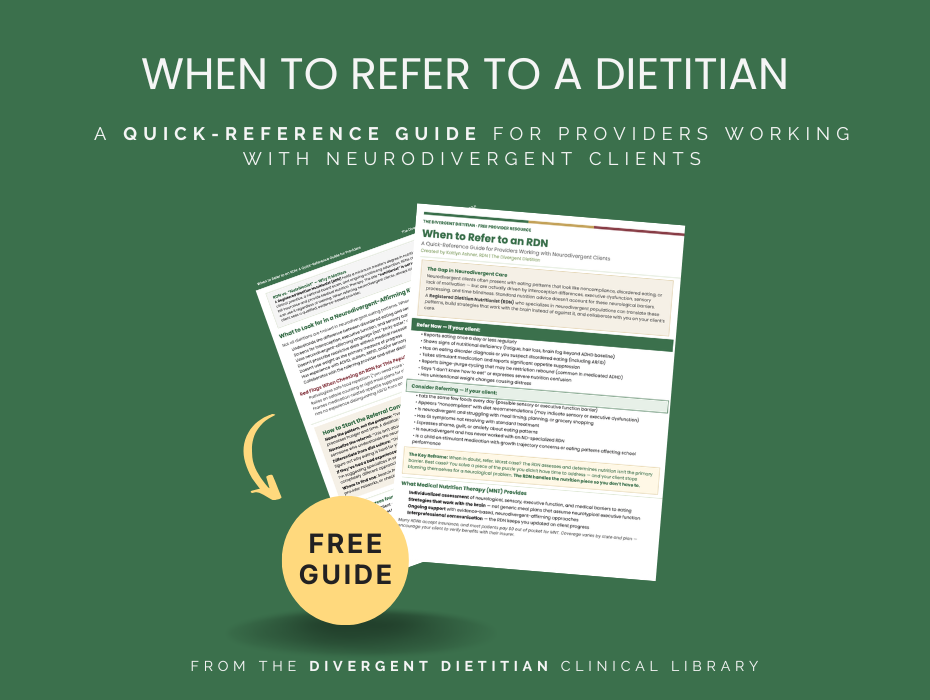

Your ADHD client forgot to eat again. Your autistic client rejected every food you suggested because of texture. Another client can’t explain why they’re not hungry — they just aren’t. And the one who swore they’d meal prep this week? Time blindness ate their Sunday.
You weren’t trained for this. Most nutrition programs don’t teach you why “listen to your hunger cues” fails for half your neurodivergent caseload, or why executive function is the actual bottleneck between a great meal plan and an empty plate.
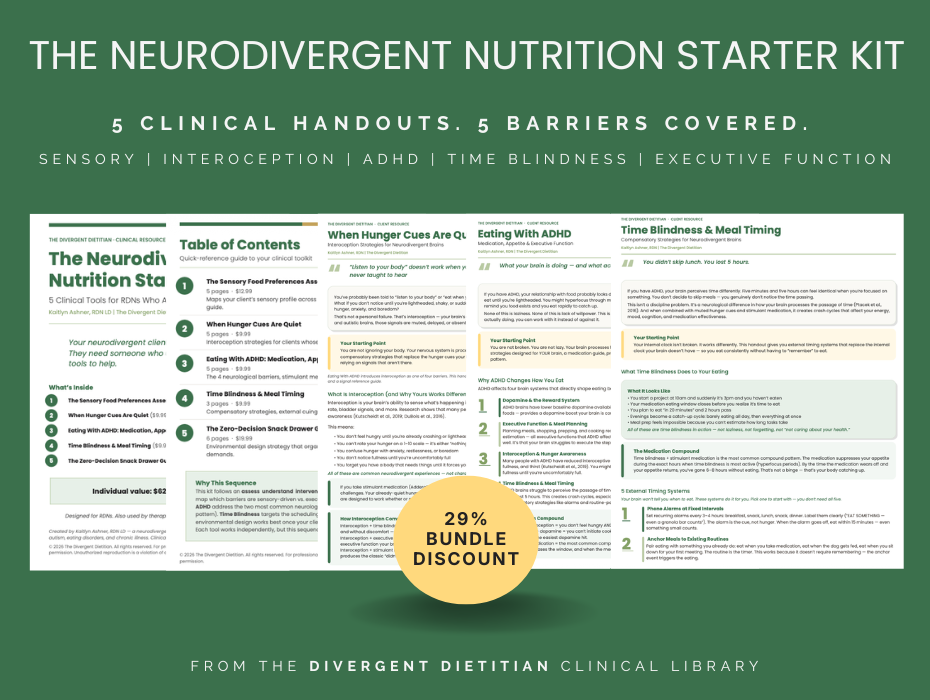
This bundle is five clinical handouts that cover the five most common barriers neurodivergent clients face around eating. Each one is designed to use in session, send home with your client, or both. No prep on your end. No theory you have to translate. Just tools that work Monday morning.

WHAT’S INSIDE (27 PAGES)
1. The Sensory Food Preferences Assessment Tool (5 pages, $12.99) — Maps your client’s sensory profile across 5 domains (texture, temperature, smell/taste, visual, auditory/environment) with a clinical summary table and interpretation guide. Screen what’s actually driving food selection instead of guessing.
2. When Hunger Cues Are Quiet (5 pages, $9.99) — For clients whose interoception doesn’t send reliable hunger signals. Covers why “listen to your body” fails, offers 6 compensatory strategies that bypass hunger cues entirely, and reframes eating without hunger as a valid clinical approach. Includes a fillable Eating Cue System worksheet and body signal translation table.
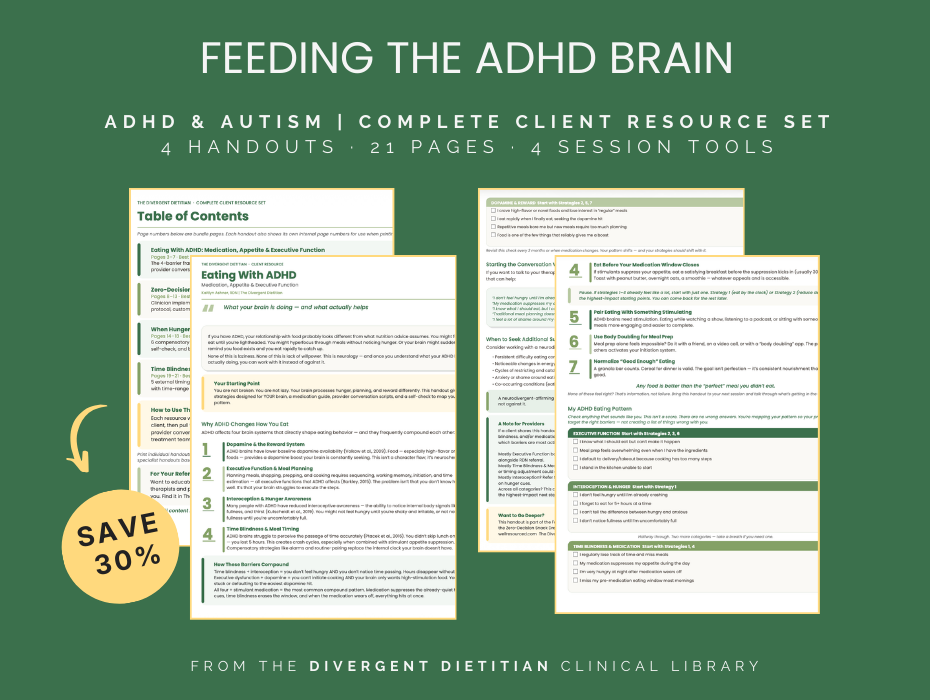
3. Eating With ADHD: Medication, Appetite & Executive Function (5 pages, $9.99) — Explains the 4 neurological barriers (dopamine, executive function, interoception, time blindness) in language your client understands. Includes stimulant medication timing guide, 7 numbered strategies, and a 4-barrier self-check.
4. Time Blindness & Meal Timing (3 pages, $9.99) — Compensatory strategies for the client who doesn’t skip meals on purpose — they lose time. External cuing systems, environment design, and structured flexibility for neurodivergent brains.
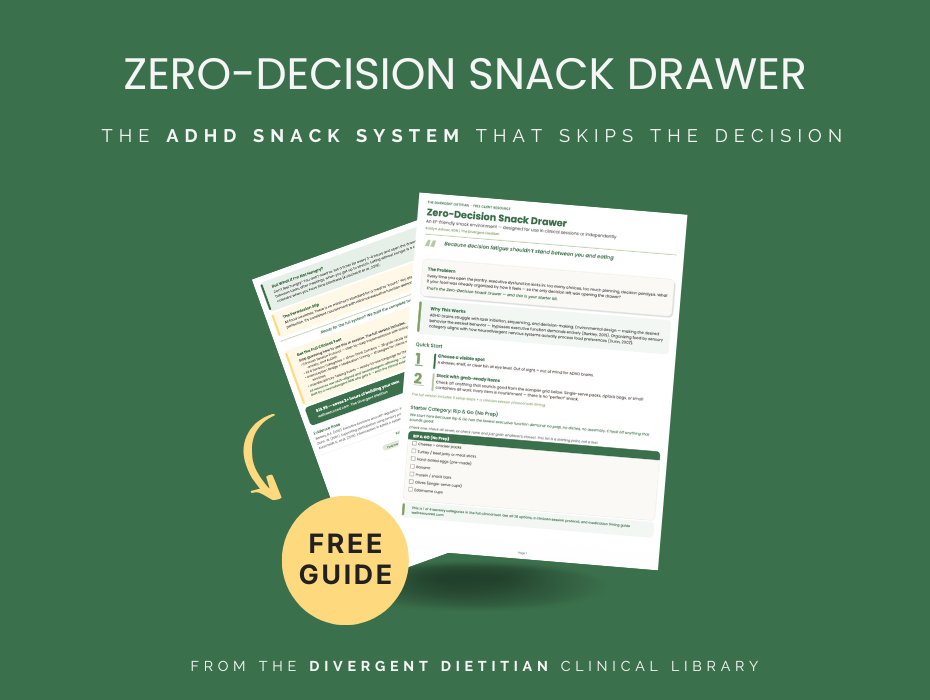
5. The Zero-Decision Snack Drawer Guide (6 pages, $19.99) — A complete environmental design strategy that organizes food by sensory category instead of food group, bypassing the executive function demands that make eating so hard. Includes setup protocol, sensory category checklists, and interoception pairing strategies.
WHY THIS SEQUENCE

This kit follows an assess → understand → intervene clinical logic. Start with the Sensory Assessment to map which barriers are sensory-driven vs. executive function-driven. Hunger Cues and Eating With ADHD address the two most common neurological barriers (interoception and the 4-barrier compound pattern). Time Blindness targets the scheduling layer. The Snack Drawer Guide comes last because environmental design works best once your client understands why their current system isn’t working. Each tool works independently, but this sequence maximizes insight before intervention.
HOW TO USE THIS KIT IN SESSION
Hand your client the Sensory Food Preferences Assessment first. Five domains, checkboxes, five minutes. The clinical summary table tells you both where sensory factors are driving food selection — and where they’re not. That distinction matters: a client who avoids foods because of texture needs different strategies than a client who avoids eating because of executive dysfunction.
From there, choose the handout that matches their primary barrier. Most neurodivergent clients have overlapping barriers — interoception compounds with time blindness, executive dysfunction compounds with dopamine-driven food seeking, and stimulant medication compounds all of it. This kit lets you address them systematically instead of one crisis at a time. Send the relevant handouts home. Revisit in 2–4 weeks to adjust.
WHY I BUILT THIS
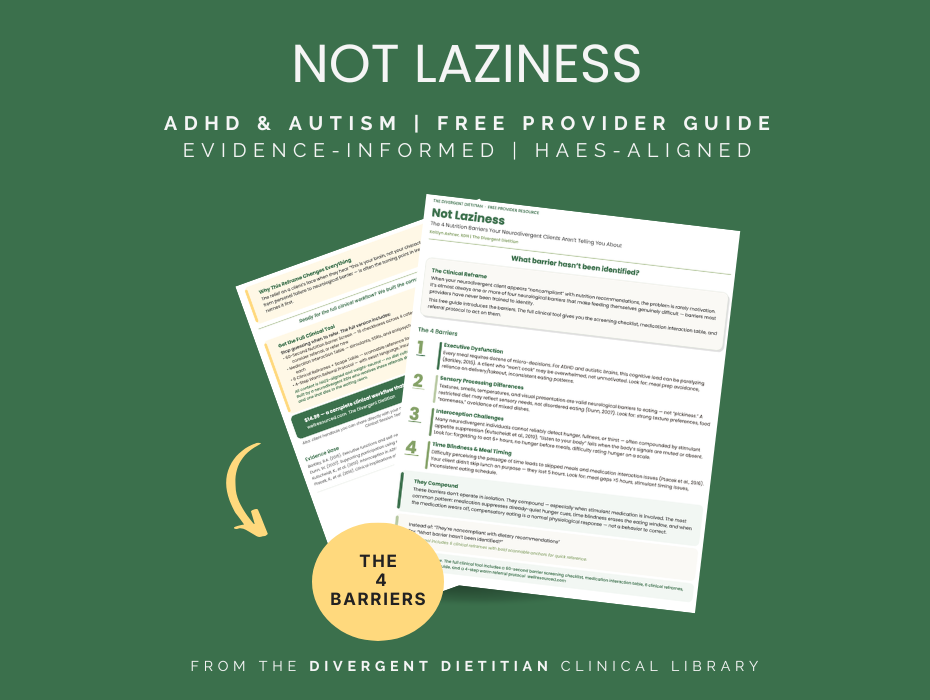
I’m an AuDHD clinician who specializes in neurodivergent nutrition. Every tool in this kit exists because I needed it in my own practice and it didn’t exist yet. I got tired of explaining the same four barriers from scratch every session — dopamine, executive function, interoception, time blindness — and watching clients blame themselves for problems that were neurological, not motivational.
So I built the handouts I wished I’d had when I started seeing this population. The sensory assessment I run in every intake. The interoception strategies I use with clients who can’t feel hunger. The ADHD eating guide that names the four barriers out loud. The time blindness workarounds I use myself. And the snack drawer system that bypasses executive function entirely.
They’re informed by clinical practice and lived experience — because understanding why eating is hard shouldn’t require your client to educate you first.
WHO THIS KIT IS FOR
- RDNs seeing more ADHD and autistic clients and needing clinical tools their training didn’t cover
- Eating disorder dietitians working with neurodivergent clients who don’t respond to standard interventions
- Therapists and prescribers who want evidence-informed nutrition resources to complement executive function or anxiety treatment
- OTs working on sensory integration who want nutrition-specific assessment tools
- Any provider looking for HAES-aligned, neurodivergent-affirming client handouts they can use immediately
WHAT MAKES THIS BUNDLE DIFFERENT
Most clinical handout bundles are discount packages — same products, lower price. This one is a clinical system. The five handouts were designed to interlock: the Sensory Assessment identifies which barriers are active, the three barrier-specific handouts address them individually, and the Snack Drawer Guide provides the environmental intervention that makes all the strategies stick. The Table of Contents includes page numbers for quick navigation, and the “Why This Sequence” guide gives you the clinical logic so you’re not guessing which tool to reach for.
All content is HAES-aligned and weight-neutral. No diet culture. No food rules. No calorie counts. No shame. Every strategy is neurodivergent-affirming and designed for brains that process hunger, time, sensory input, and executive demands differently.
YOU MAY ALSO LIKE
Browse the full collection: The Divergent Dietitian
PRICE: $44.99 (Individual value: $62.95 — save 29%)
FORMAT: PDF, 27 pages (2 front matter + 24 content + 1 back page), US Letter, print-ready, instant download, professionally designed with neurodivergent-accessible formatting (Poppins font, high-contrast design, clear visual hierarchy)
CREATED BY: Kaitlyn Ashner, RDN LD — neurodivergent-affirming nutrition specialist, AuDHD clinician, and creator of The Divergent Dietitian
Reviews
You must log in and be a buyer of this download to submit a review.