
Product Overview
Traditional eating disorder treatment often assumes that everyone experiences hunger, fullness, sensory input, routines, and emotional regulation in the same way. For neurodivergent individuals—including those with ADHD, autism, sensory processing differences, and executive functioning challenges—this assumption can lead to repeated treatment failure, unnecessary shame, and misinterpretation of adaptive behaviors as resistance.
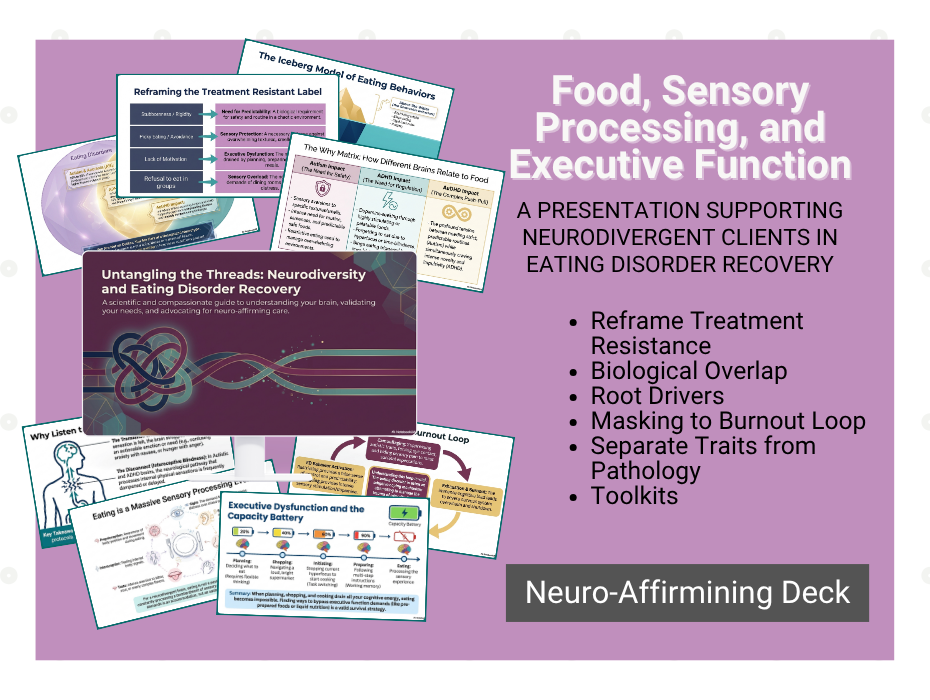
This presentation provides a neurodiversity-affirming framework for understanding eating disorders through the lens of sensory processing, executive functioning, nervous system regulation, and cognitive differences. Rather than asking clients to force themselves into neurotypical recovery models, this resource helps clinicians and individuals build sustainable recovery strategies that work with the brain instead of against it.
What the Presentation Includes
- Neurodivergent Foundations: An overview of how ADHD, autism, sensory processing differences, and executive functioning influence eating behaviors, recovery, and treatment engagement.
- The Iceberg Model of Eating Behaviors: A visual framework distinguishing observable eating disorder symptoms from the hidden neurological, sensory, emotional, and cognitive factors driving them.
- Treatment Resistance Reframing: A model that shifts the narrative from “noncompliance” and “lack of motivation” toward understanding sensory overload, cognitive fatigue, burnout, and nervous system protection.
- Sensory Processing & Food: An exploration of how taste, texture, smell, temperature, predictability, and interoception shape food acceptance and nutritional adequacy.
- Executive Dysfunction & Recovery: Practical illustrations showing how planning meals, grocery shopping, cooking, remembering to eat, transitioning between tasks, and decision fatigue create barriers to recovery.
- Masking & Burnout Framework: A guide explaining how chronic masking can contribute to exhaustion, worsening eating disorder symptoms, and decreased treatment capacity.
- Neurodiversity-Affirming Treatment Models: Practical strategies that emphasize flexibility, accommodations, collaborative problem solving, and individualized recovery rather than rigid behavioral expectations.
- Communication & Self-Advocacy Tools: Client-friendly resources that help individuals identify their needs, communicate accommodations, and participate more effectively in treatment.
- Capacity-Based Recovery Planning: A framework for adapting nutrition interventions based on fluctuating cognitive, sensory, and emotional capacity while maintaining progress toward recovery.
What it Does NOT Include
- Diagnostic Training: This presentation is not designed to diagnose autism, ADHD, or other neurodevelopmental conditions, nor does it replace comprehensive psychological assessment.
- Medical Management Protocols: The presentation does not include medical stabilization guidelines, refeeding algorithms, medication protocols, or acute psychiatric management.
- Rigid Meal Plans or Compliance Systems: Consistent with a neurodiversity-affirming, weight-inclusive philosophy, this resource avoids inflexible meal plans, calorie prescriptions, behavioral contracts, or one-size-fits-all recovery expectations.
Target Audience & Eligible Clinicians
This presentation is designed for both professional education and direct client psychoeducation.
- Clients & Individuals in Recovery: Helps neurodivergent individuals better understand why traditional recovery approaches may have felt overwhelming while providing practical, validating alternatives.
- Registered Dietitians (RD/RDN): Supports nutrition counseling that incorporates executive functioning, sensory processing, food flexibility, and individualized accommodations.
- Therapists, Psychologists, & Counselors (LMFT, LCSW, PsyD): Provides tools for understanding treatment barriers, reducing shame, and integrating neurodiversity-affirming approaches into psychotherapy.
- Occupational Therapists (OT): Complements sensory integration and daily living interventions with nutrition-focused applications.
- Nursing & Residential Support Staff: Improves understanding of sensory accommodations, cognitive overload, and flexible support strategies during meals and treatment programming.
Application Across Levels of Care
- Outpatient & Private Practice: Excellent for introducing clients to neurodiversity-affirming recovery concepts while developing individualized nutrition and coping strategies.
- Intensive Outpatient (IOP) & Partial Hospitalization (PHP): Functions as structured psychoeducation for groups focused on executive functioning, sensory processing, and sustainable recovery planning.
- Residential & Inpatient Programs: Serves as staff training to reduce misinterpretation of neurodivergent behaviors and improve individualized treatment planning across multidisciplinary teams.
What You Get If You Buy This
When you purchase this digital resource, you receive a polished, client-ready presentation designed to help clinicians deliver compassionate, evidence-based neurodiversity-affirming eating disorder education immediately.
File Deliverables & Specifications
- File Type: Delivered as an unbranded, high-resolution Microsoft PowerPoint (.pptx) presentation.
- Client-Ready: Professionally designed and ready for immediate use in therapy sessions, nutrition counseling, staff education, classroom instruction, or support groups.
- Format Security: The layout, graphics, and educational content are provided in a non-editable format to preserve the integrity of the presentation design and educational framework.
You must log in and be a buyer of this download to submit a review.