
Product Overview
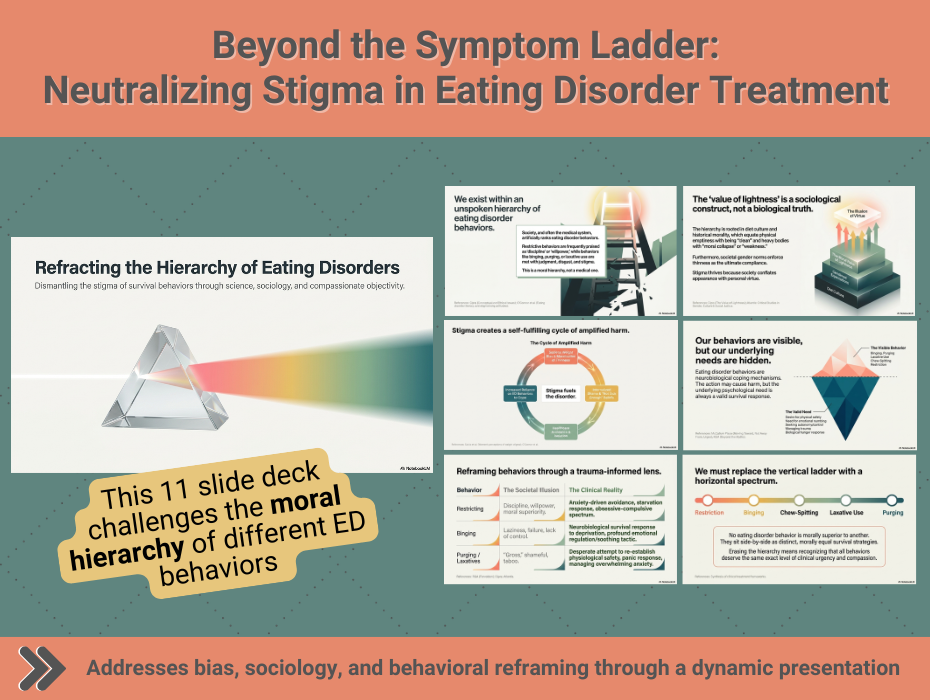
Eating disorder recovery often takes place within an unspoken moral hierarchy. While restrictive behaviors are frequently praised as “discipline,” behaviors like binging, purging, or laxative use are met with deep social and clinical stigma.
This presentation provides a transformative, weight-inclusive framework to dismantle this moral ladder. By viewing eating disorder behaviors through a sociology- and neurobiology-informed lens, this resource helps individuals reframe harmful symptoms as valid, visibility-masked survival mechanisms. It introduces actionable models for food neutrality, person-centered language, and weight neutrality to eliminate the cycle of shame and foster deeper internal trust.
What the Presentation Includes:
- The Moral Hierarchy Analysis: Deep dives into how diet culture, gendered norms, and historical morality artificially rank symptoms—conflating thinness and physical emptiness with personal virtue.
- The Cycle of Amplified Harm: A visual model tracking how weight bias and internalized shame prevent individuals from feeling “sick enough,” driving healthcare avoidance, isolation, and an increased reliance on coping behaviors.
- The Iceberg Model & Behavior Reframing: A tool that separates visible behaviors (restriction, purging, chew-spitting, binging) from hidden, valid neurobiological survival needs (trauma management, emotional numbing, autonomy, and physical safety).
- Horizontal Spectrum Mapping: A paradigm-shifting framework that flattens the vertical ladder, positioning all eating disorder behaviors side-by-side as distinct, morally equal coping strategies requiring identical clinical urgency.
- Food & Weight Neutrality Models: Practical guides to stripping away socially attributed guilt from food labels (e.g., transitioning from “good vs. bad” to “nutrient-dense vs. play foods”) and separating clinical recovery from the pursuit of weight suppression.
- Person-Centered Language Blueprint: A translation matrix mapping how linguistic shifts (e.g., moving from “I am anorexic” to “I am a person with anorexia”) actively separate an individual’s core identity from their diagnosis.
What it Does NOT Include:
- Acute Medical Management Protocols: This presentation addresses bias, sociology, and behavioral reframing. It does not include medical advancement charts, biochemical pathways, or algorithms for refeeding syndrome or electrolyte replacement.
- Rigid Behavioral Rulebooks: In alignment with a weight-inclusive, non-diet clinical perspective, this deck does not offer strict meal plans, caloric tracking benchmarks, or compliance-driven behavioral contracts.
Target Audience & Eligible Clinicians
This resource is optimized for both professional training and direct client psychoeducation:
- Clients & Patients in Treatment: Designed as an accessible, deeply validating educational tool for individuals currently navigating recovery to help them understand their symptoms without self-judgment.
- Therapists, Psychologists, & Counselors (LMFT, LCSW, PsyD): To help clients process internalized shame, map out underlying trauma/coping needs, and replace judgment with curiosity.
- Registered Dietitians (RD/RDN): To introduce food neutrality frameworks, unpack diet culture influences, and guide clients away from moralizing their eating habits.
- Nursing & Residential Support Staff: To eliminate implicit bias during floor monitoring, meal support sessions, and behavior interventions.
Application Across Levels of Care
- Outpatient (Private Practice / IOP): Essential for dismantling the “not sick enough” belief system that frequently prevents outpatient clients from engaging fully in treatment or seeking higher care when medically necessary.
- Partial Hospitalization Programs (PHP) & Intensive Outpatient (IOP): Provides a structured framework for psychoeducation groups, giving clients the tools to look at their urges with objective curiosity rather than shame.
- Residential & Inpatient Treatment Centers: A foundational training tool for onboarding multidisciplinary staff, ensuring that all clinicians approach binging, purging, chew-spitting, and restriction with equal clinical urgency and uniform compassion.
What You Get If You Buy This
When you purchase this digital resource, you receive a client-ready, professional slide deck designed to immediately reorient treatment teams and individuals toward a stigma-free framework.
File Deliverables & Specifications
- File Type: Delivered as an unbranded, high-resolution PowerPoint presentation (.pptx) file.
- Client-Ready: Fully finalized and styled for professional delivery—perfect for immediate use in individual therapy sessions, clinical staff trainings, or recovery support groups.
- Format Security: The layout, text content, and custom imagery are non-editable to preserve the structural integrity, clinical citations, and precise formatting of the psychological frameworks.
You must log in and be a buyer of this download to submit a review.