
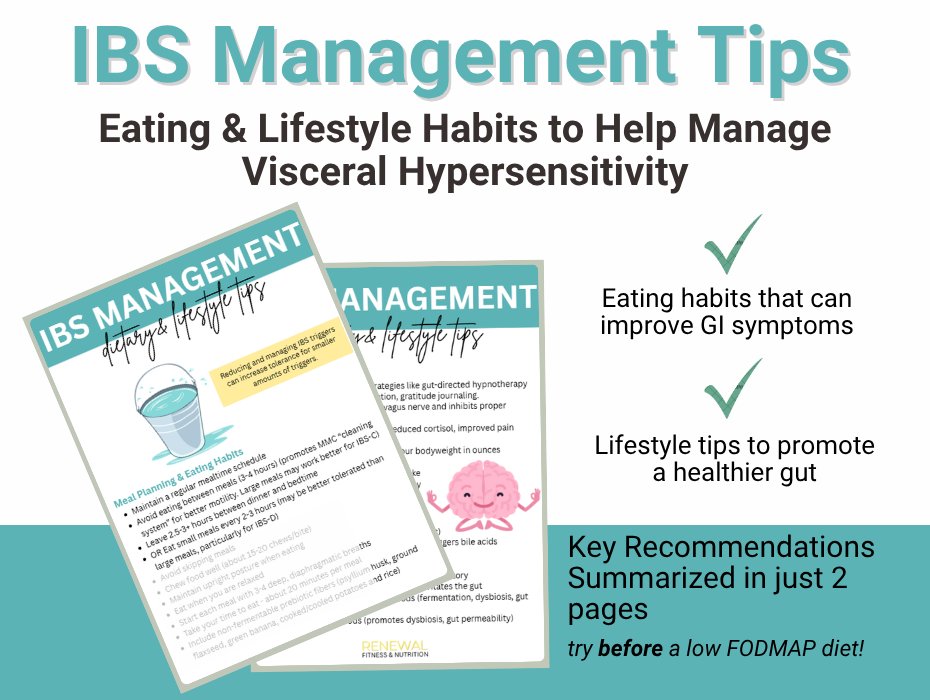
Did you know that lifestyle and dietary habits are sometimes just as effective as a low-FODMAP diet for IBS?
I created this after attending multiple webinars and conferences and reading various studies and resources. I condensed my notes into this one, simple place to help me better educate my patients so I didn’t have to remember all of these tips off the top of my head!
Benefits:
- Use as a starting point with IBS patients to instill good meal planning, eating, stress management, and dietary habits to manage visceral hypersensivity and increase tolerance to high-FODMAP foods.
- This clean, simple 2-page handout uses bullet-points only for easy reading
- Easily review the many modifications that can be made to help patients manage IBS and reduce symptoms before having to try a restrictive low-FODMAP diet.
- These tips are far less confusing than a low-FODMAP diet and should be implemented regardless of the diet to ensure better long-term outcomes rooted in stress, anxiety, or poor eating and lifestyle habits.
Who to Use this Handout with:
- Clients who have a new IBS diagnosis before jumping to low-FODMAP
- Clients who haven’t had success with low-FODMAP
- Many of these tips also work with GERD and gastritis.
How to Use this Handout:
- Pick 1-3 bullets to address at each session, assessing symptom progress along the way.
- Send to clients so they have all of the tips in an easy to reference handout.
Note: This handout does NOT reference or use the low-FODMAP diet. Instead, it focuses more on daily habits and general food triggers than can help reduce symptoms and improve visceral hypersensitivity over time by addressing root issues like stress, anxiety, rushed eating, excess caffeine, etc.
Users who purchased Irritable Bowel Syndrome (IBS) Management Handout, also purchased:

You must log in and be a buyer of this download to submit a review.