
Help Your Clients Protect Their Recovery Through the Holidays.
A practical holiday-planning workbook for eating disorder professionals and their clients.
Holiday meals. Travel. Family comments. Changes in routine. Food rules. Diet talk. Body talk.
The holidays can bring a lot of challenges into eating disorder recovery all at once.
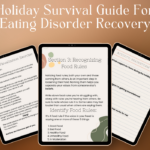
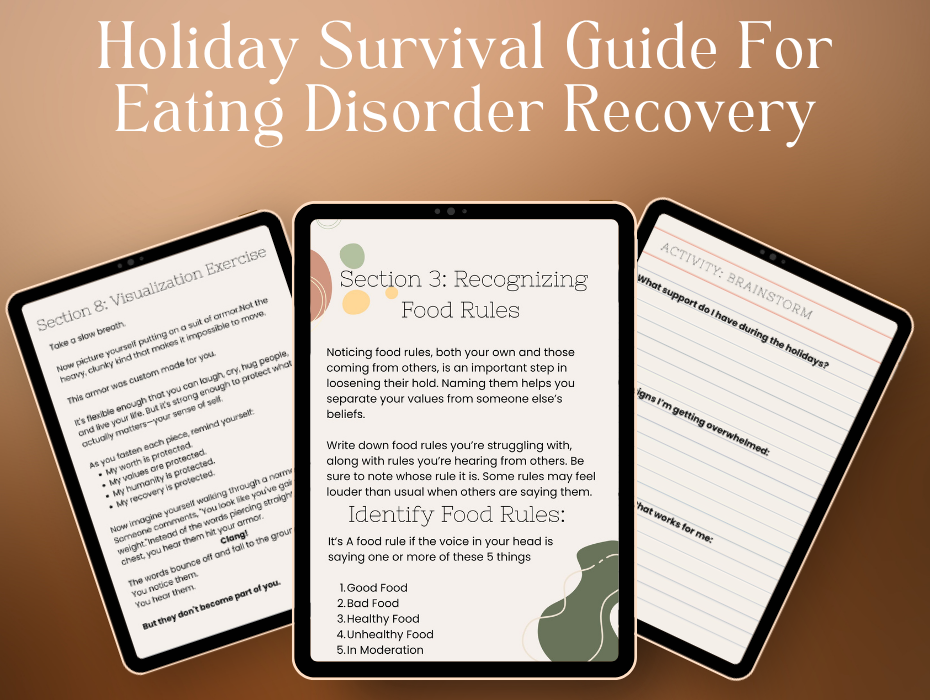
The Holiday Survival Guide for Eating Disorder Recovery gives dietitians and other treatment professionals a structured way to help clients anticipate those challenges, create a support plan, and practice recovery skills before they’re sitting at the holiday table.
What’s Included
This 25-page workbook includes practical exercises and reflection tools covering:
- Holiday food rules and eating disorder thoughts
- Changes in meals and routines
- Meal support and grounding strategies
- Identifying potential triggers and warning signs
- Preparing for food, weight, and body comments
- Boundary setting
- Identifying safe and supportive people
- Coping with difficult family dynamics
- Values and meaningful holiday traditions
- Guided visualization
- Recovery-focused journaling and reflection
Who This Resource Is For
Designed for dietitians, therapists, and other eating disorder professionals supporting clients through the holiday season.
It may be especially useful for clients navigating:
- Eating disorder recovery
- Restrictive eating
- Binge-restrict patterns
- Holiday food anxiety
- Changes in eating routines
- Fear around holiday meals
- Family or social triggers
- Food and body comments
- Difficulty setting boundaries
- Increased eating disorder thoughts during the holidays
How Clinicians Can Incorporate It Into Practice
Use the workbook in the weeks leading up to holidays to identify potential challenges before they happen.
Complete exercises together during sessions.
Develop a holiday support plan.
Identify which food rules are likely to get louder.
Prepare responses to triggering comments.
Discuss how meals and snacks will be supported when routines change.
Identify supportive people your client can turn to.
Then revisit the workbook after the holiday to reflect on what worked, what was difficult, and what might help next time.
You don’t need to complete every page. Choose the exercises that match the challenges your client is actually facing.
Suggested Uses
Use the Holiday Survival Guide to help clients:
- Prepare for holiday meals and gatherings
- Maintain more consistent nourishment when routines change
- Identify and challenge holiday-specific food rules
- Plan for travel or time away from home
- Practice grounding before or during meals
- Prepare responses to unwanted food, weight, or body comments
- Establish boundaries with family and friends
- Identify supportive people before difficult situations
- Recognize early warning signs that recovery is becoming harder
- Explore what they actually want the holidays to mean beyond food and body concerns
Don’t Wait Until the Holiday Table.
The middle of Thanksgiving dinner probably isn’t the ideal time to discover that your client has no idea what they’re going to say when Uncle Bob comments on their plate.
Prepare beforehand.
What situations are they worried about?
Which food rules are likely to show up?
Who feels safe?
What happens if meals are delayed?
What comments need a prepared response?
What support can they put in place now?
The Holiday Survival Guide for Eating Disorder Recovery gives those conversations somewhere to go.
Add it to your clinical toolbox and help your clients walk into the holidays with a recovery plan—not just crossed fingers.
You must log in and be a buyer of this download to submit a review.