
-
Supporting someone with an eating disorder can feel overwhelming.
You want to help.
You don’t want to say the wrong thing.
But sometimes the most well-meaning comments can unintentionally strengthen the eating disorder instead of supporting recovery.That’s exactly why I created this guide.
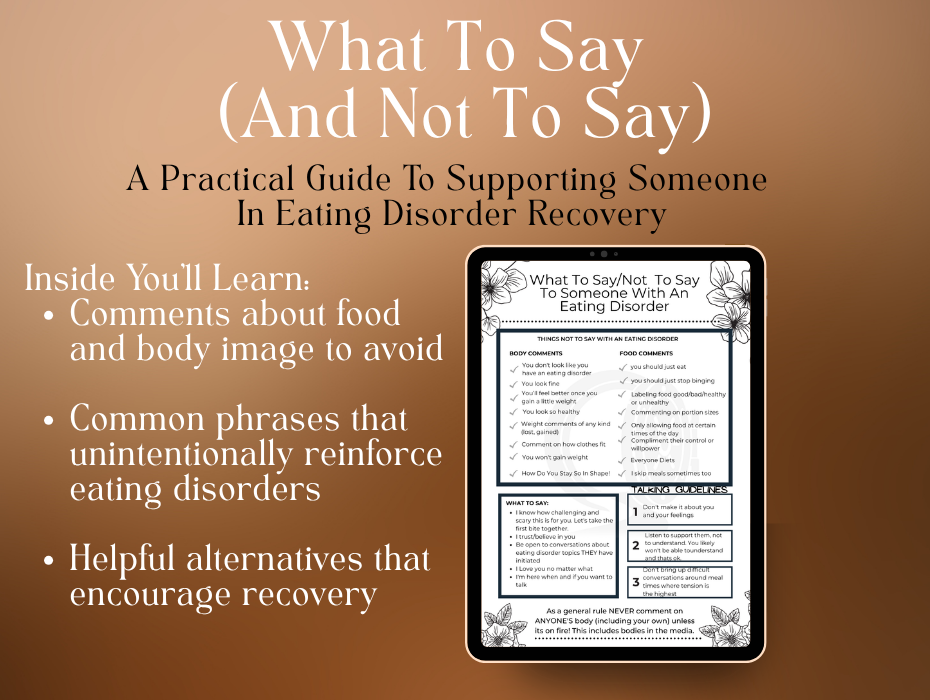
Whether you’re a parent, partner, spouse, friend, therapist, or healthcare provider, this printable quick-reference sheet gives you practical examples of what to avoid—and what to say instead.
Instead of wondering if you’re making things worse, you’ll have clear, compassionate language you can use with confidence.
Inside you’ll find:
• Comments about food and body image to avoid
• Common phrases that unintentionally reinforce eating disorders
• Helpful alternatives that encourage recovery
• Meal support communication tips
• Real-life examples you can begin using immediately
• An easy-to-read format that’s perfect to print or save on your phone
This isn’t about saying the “perfect” thing.
It’s about creating conversations that feel safe, supportive, and recovery-focused.
Small changes in the words we choose can make a meaningful difference.
Whether you’re sitting beside someone during a meal, supporting a loved one through treatment, or simply trying to understand how to help, this guide provides practical language you can turn to again and again.
Because recovery isn’t supported by perfect words—it grows through compassion, patience, and connection.
You must log in and be a buyer of this download to submit a review.