
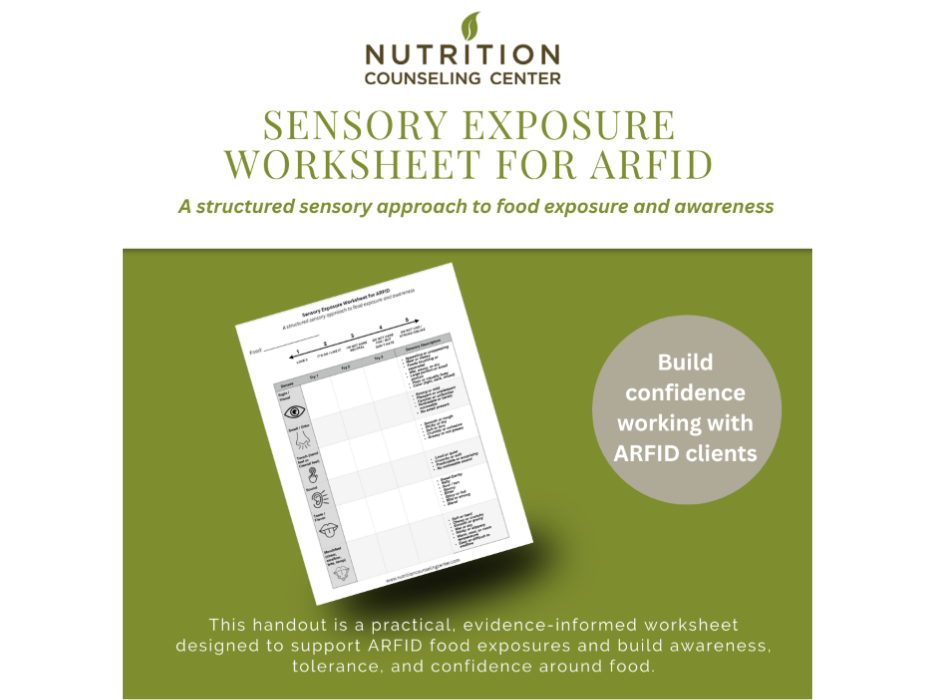
This Sensory Exposure Worksheet for ARFID is designed for adolescents and adults who experience food avoidance related to sensory sensitivity, fear, or uncertainty. Rather than focusing on intake or preference, this tool supports food exposure work through neutral, structured sensory exploration.
Clients are guided through a two-stage process:
- Rating 1: visual, smell, touch, and sound
- Rating 2: taste and mouthfeel (only if and when the client is ready)
Using clear, non-judgmental sensory descriptors, clients can describe their experience without needing to label foods as “good” or “bad.” This approach helps build awareness, reduce fear responses, and increase tolerance over time.
This worksheet is especially helpful for:
- adolescents and adults with ARFID
- sensory-driven food avoidance
- food exposure and food chaining work
- clients who struggle to verbalize food experiences
- shifting from all-or-nothing thinking to neutral observation
The worksheet can be used repeatedly across different foods to identify patterns, track progress, and guide clinical decision-making.
“How to Use”
Use this worksheet during in-session exposures or supported home practice. Clients may stop at any point in the process; tasting is optional. Encourage descriptive language rather than evaluative judgments to support regulation and learning.
Note: This resource is intended for adolescents and adults. Pediatric and child-focused ARFID tools are available separately through our store.
You must log in and be a buyer of this download to submit a review.