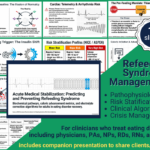

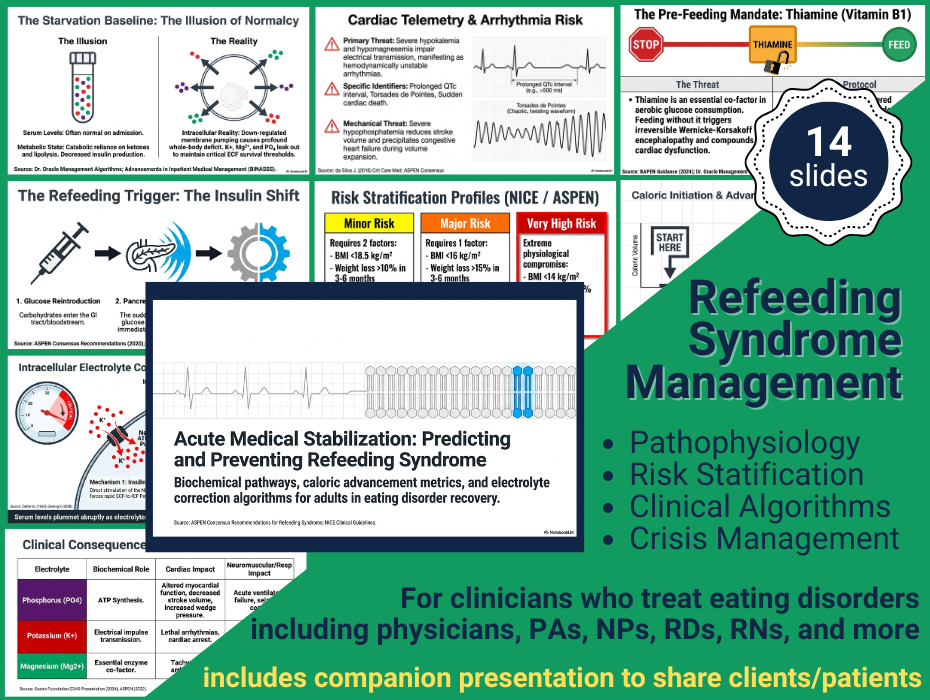
Acute Medical Stabilization: Predicting and Preventing Refeeding Syndrome
Product Overview
When treating adults in severe eating disorder recovery, normal serum labs on admission can mask profound, life-threatening intracellular deficits. This comprehensive, highly visual PowerPoint presentation provides clinicians with a clear, algorithmic framework to identify risk, safely introduce nutrition, and manage electrolyte collapse using evidence-based guidelines from ASPEN, NICE, and BAPEN.
What the Presentation Includes:
- Pathophysiology Core: Deep dives into the “illusion of normalcy” (starvation baseline), the pancreatic insulin spike triggered by glucose reintroduction, and the mechanics of intracellular electrolyte collapse (K+, Mg2+, and PO4).
- The Electrolyte Matrix: A clear breakdown of the biochemical roles, cardiac impacts (such as prolonged QTc intervals and Torsades de Pointes), and neuromuscular risks associated with refeeding.
- Risk Stratification Models: Color-coded minor, major, and very high-risk profiling charts based on BMI, percentage of weight loss, and fasting duration.
- Actionable Clinical Algorithms: Exact dosing and timing guidelines for the pre-feeding thiamine mandate, 7-day caloric initiation and advancement tracking ($10 \text{ kcal/kg/day}$ start), and weight-based electrolyte replacement protocols.
- Crisis Management Framework: The “50% Rule” protocol detailing exactly when and how to scale back nutritional support during severe intracellular shifts without causing further metabolic whiplash.
- Synthesis Checklist: A clean, 4-step cyclical infographic summarizing the entire acute medical stabilization process from intake to tracking.
What it Does NOT Include:
- Psychotherapy Techniques: This presentation focuses strictly on acute medical stabilization and pathophysiology. It does not cover behavioral interventions, meal support therapy scripts, or psychological modalities (like CBT-E or DBT).
- Pediatric Guidelines: The metrics, caloric volumes, and stratification criteria provided in this slide deck are designed exclusively for adult populations.
- Long-Term Nutritional Rehabilitation: The scope is limited to the critical initial refeeding phase (primarily the first 72 hours to 7 days) and does not cover long-term weight restoration programming.
Target Audience & Eligible Clinicians
This resource is designed for multidisciplinary healthcare professionals managing the medical risks of eating disorder recovery:
- Medical Providers: Physicians (MD/DO), Physician Assistants (PAs), and Nurse Practitioners (NPs) in emergency, inpatient, or residential settings who write refeeding and electrolyte replacement orders.
- Dietitians: Registered Dietitians (RDs) specializing in eating disorders who calculate initial caloric targets and design advancement schedules.
- Nursing Staff: Registered Nurses (RNs) managing cardiac telemetry, monitoring for refeeding syndrome symptoms, and administering IV protocols.
Application Across Levels of Care (Eating Disorder Treatment)
This presentation serves as an excellent training tool, clinical reference guide, or protocol-building blueprint across multiple treatment tiers:
- Inpatient Medical Wards & Emergency Departments (ED): Identifies highly compromised patients immediately upon admission, helping teams look past “normal” blood panels to initiate pre-feeding thiamine protocols and prevent sudden cardiac death.
- Residential Treatment Centers (RTC): Equips the medical and nursing staff to handle the 72-hour danger zone safely, mapping out exactly when to draw labs (every 12 hours) and how to deploy the 50% rule if electrolytes suddenly plunge.
- Partial Hospitalization (PHP) / Intensive Outpatient (IOP): Assists outpatient dietitians and medical directors in risk-stratifying transitioning patients. It establishes clear medical boundaries for when an individual’s baseline risk (BMI <14 or >15 days of starvation) requires a higher level of acute medical care.
What you get
- Powerpoint .pptx file
- Note: All slides are pre-formatted using a modern, high-contrast palette suitable for immediate presentation or embedding into hospital intranet training portals.
- Unbranded
- Text/images not editable
- Free bonus: Companion Powerpoint intended for clients/patients
You must log in and be a buyer of this download to submit a review.