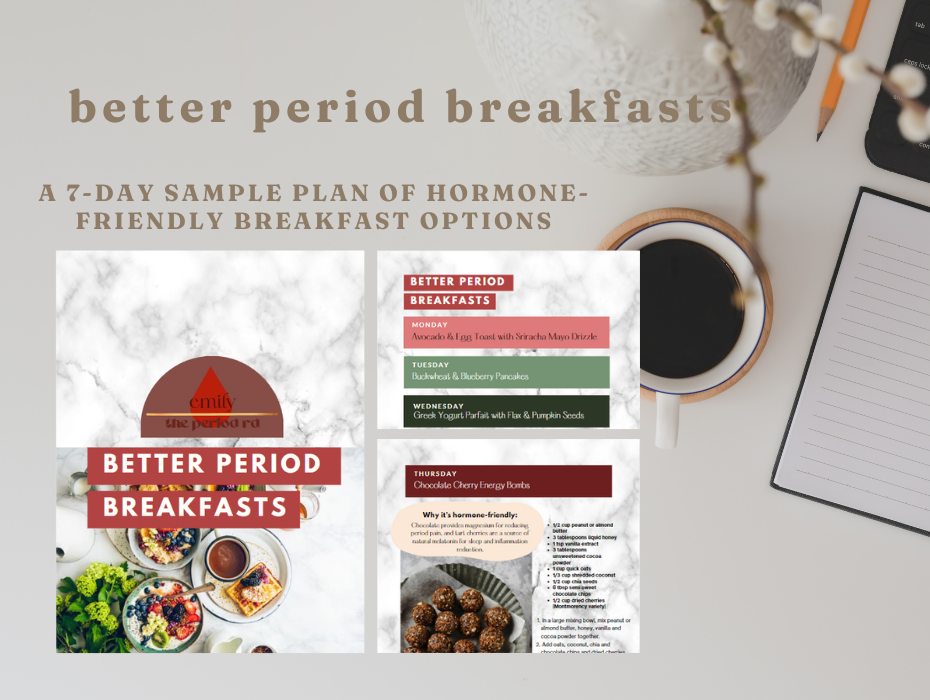

Heavy, painful periods are not “normal.” Birth control and ibuprofen may be great supports for some folks, but the Registered Dietitian absolutely plays a role in providing evidence-based, weight inclusive care for folks struggling with dysmenorrhea.
Calling all dietitians who work with patients who have a PMDD, endometriosis, adenomyosis, or uterine fibroids:
- Do you have an idea of what you’d like to focus on with your clients, but lack structure?
- Need a cute handout to go along with your evidence-based nutrition counseling for heavy, painful periods?
- Want guidance on foods to add for clients with endo, PMDD, and more?
- Finding that most handouts are either very diet-y, or out-dated?
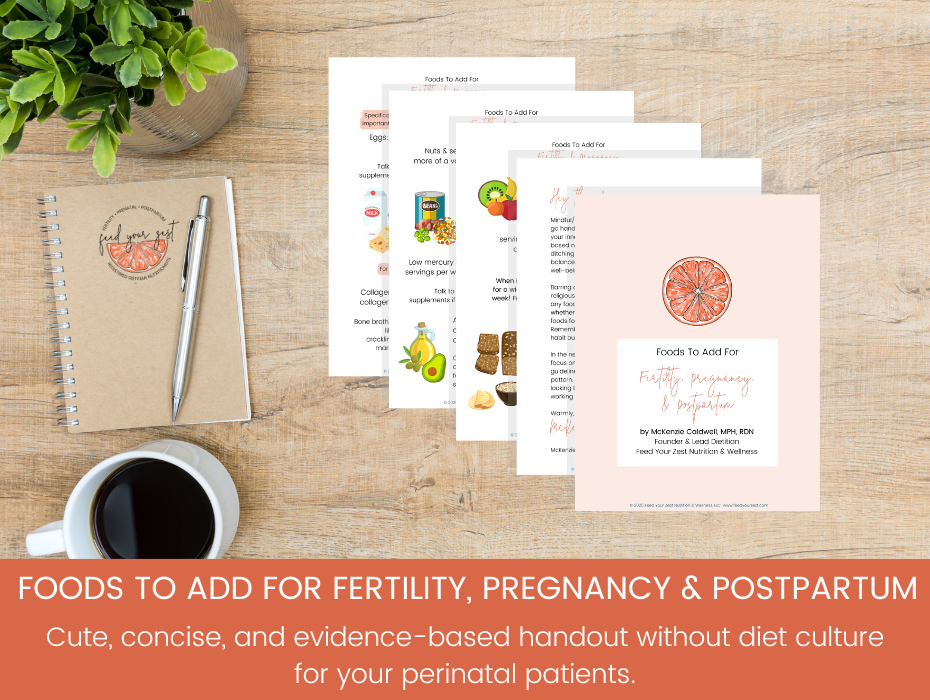
Look no further! The Foods to Add for Heavy, Painful Periods handout is a women’s health dietitian’s BFF – evidence based recommendations, no stigmatizing or restrictive language, and it’s cute! While there may be some slight differences in treatment for each condition, there is quite a bit of overlap in nutrition interventions for endometriosis, PMDD, fibroids, and adenomyosis. Research shows that high intake of antioxidants, fiber, omega-3 fatty acids, and overall nutrient-dense foods can help immensely with fighting inflammation and helping the body’s natural detoxification processes.
I designed this comprehensive handout specifically for my clients with dysmenorrhea because I found that they needed structure and a visual aid to go along with my recommendations. Many patients, stuck in the diet mentality, were too focused on foods to cut out, or felt caught up in specific foods they thought were a magic cure for their symptoms. This handout helps them zoom out, focus on more sustainable, long-term habits, and keep a positive attitude towards all types of foods.
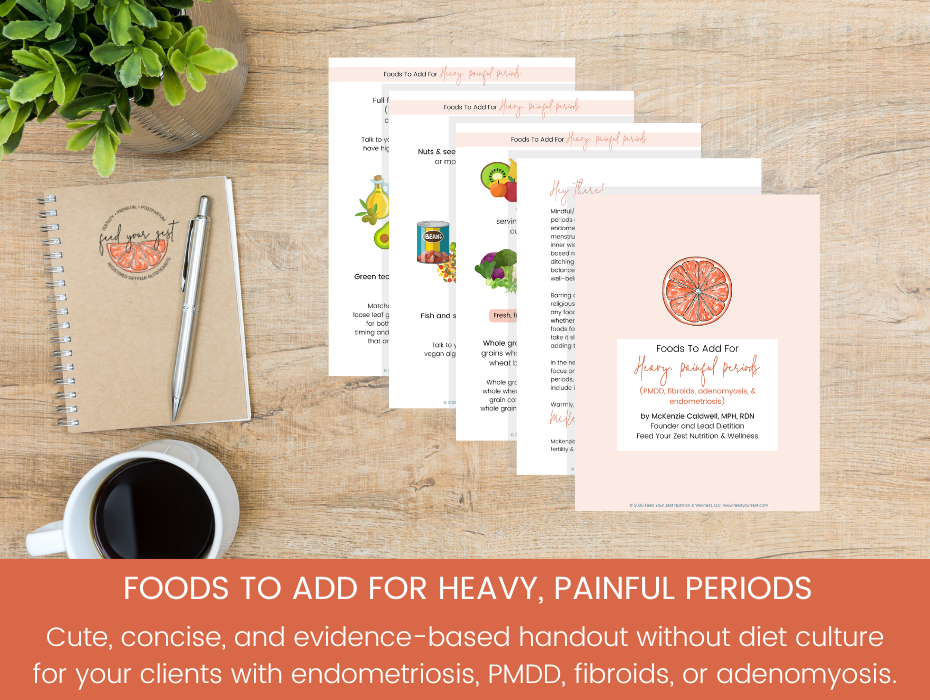
This 4-page handout includes:
- Note to the patient about how to use the guide
- Foods to add for endometriosis, PMDD, adenomyosis, and uterine fibroids
- Serving size and frequency recommendations
- Culturally inclusive food examples
- Encouragement to speak with RD if certain foods are not eaten for preference, ethical reasons, or allergies/intolerances
This handout incorporates evidence-based recommendations that I’ve gathered from the Dietary Guidelines for Americans for women of reproductive age, various studies on the Mediterranean diet for endometriosis, green tea and omega-3 fatty acids for dysmenorrhea, and the Nurse’s Health Study.
You must log in and be a buyer of this download to submit a review.