
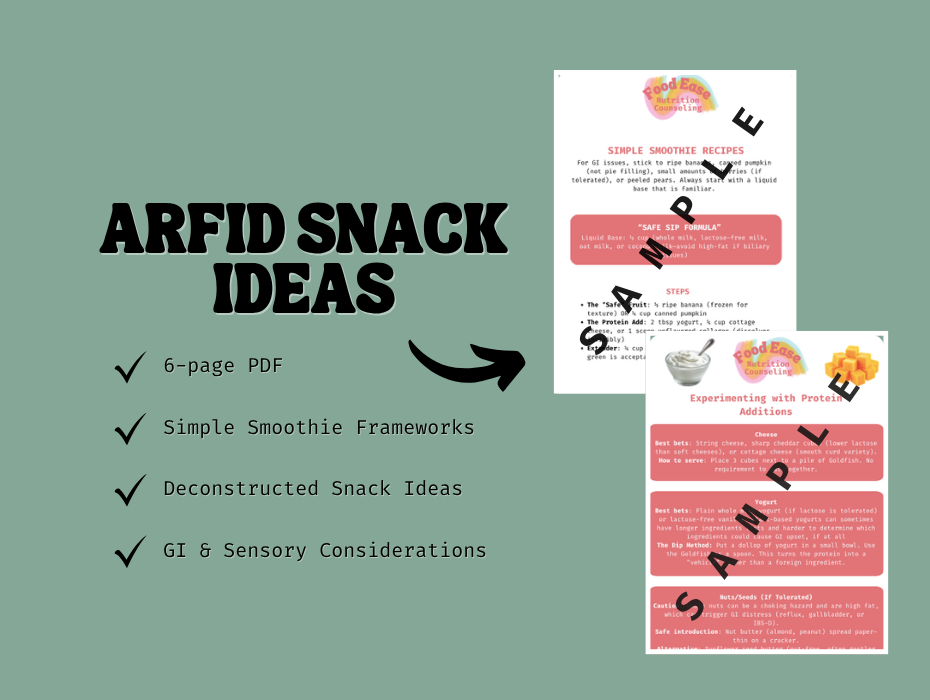
This 6-page guide is designed to make snack-building feel simpler, more structured, and less stressful by focusing on predictability, flexibility, and reducing decision fatigue.
What this resource helps with
- Feeling overwhelmed by too many food choices or “where to start”
- Limited safe foods and difficulty expanding variety
- Sensory challenges with texture, taste, or temperature
- GI discomfort that affects food tolerance
- Stress or anxiety around snack and meal decisions
What you’ll be able to do after using it
- Build simple, predictable snacks using flexible frameworks
- Create gentle smoothies using the “Safe Sip” method
- Break foods into low-pressure, deconstructed snack combinations
- Add protein in ways that feel less overwhelming or forced
- Support variety without increasing stress or decision fatigue
What’s included (6-page PDF)
- Page 1: Safe Sip Smoothie Framework
- Simple base formula for building tolerated smoothies
- Gentle fruit + protein combinations
- Page 2: 3 Gentle Smoothie Recipes
- Creamsicle (low-fat, nausea-friendly)
- Strawberry “Milkshake” (low-acid, smooth texture)
- Pumpkin Pie (IBS-friendly, high soluble fibre)
- Page 3: Deconstructed Snack Ideas
- Crackers + fruit pairings
- Banana “sushi”
- Canned fruit options and simple combinations
- Page 4: Protein Additions Guide
- Cheese, yogurt, milk, and nut/seed butter ideas
- Low-pressure serving methods (separate, dips, spreads)
- Page 5: GI & Sensory Support Tips
- Temperature sensitivity strategies
- Fat tolerance considerations
- Texture and symptom-aware adjustments
- Page 6: Safe Plate Strategy
- Divided plate approach for introducing new foods
- Keeping safe foods visible and accessible
How it’s used in practice
- Quick-reference tool for snack planning
- Support during early food exposure or rebuilding intake
- Helpful for “I don’t know what to eat” moments
- Can be used in sessions, at home, or in caregiver support
Who it’s for
- Individuals with ARFID or selective eating patterns
- People with GI sensitivities affecting food tolerance
- Caregivers supporting low-pressure eating environments
- Dietitians, therapists, and allied health professionals using practical tools in sessions
You must log in and be a buyer of this download to submit a review.