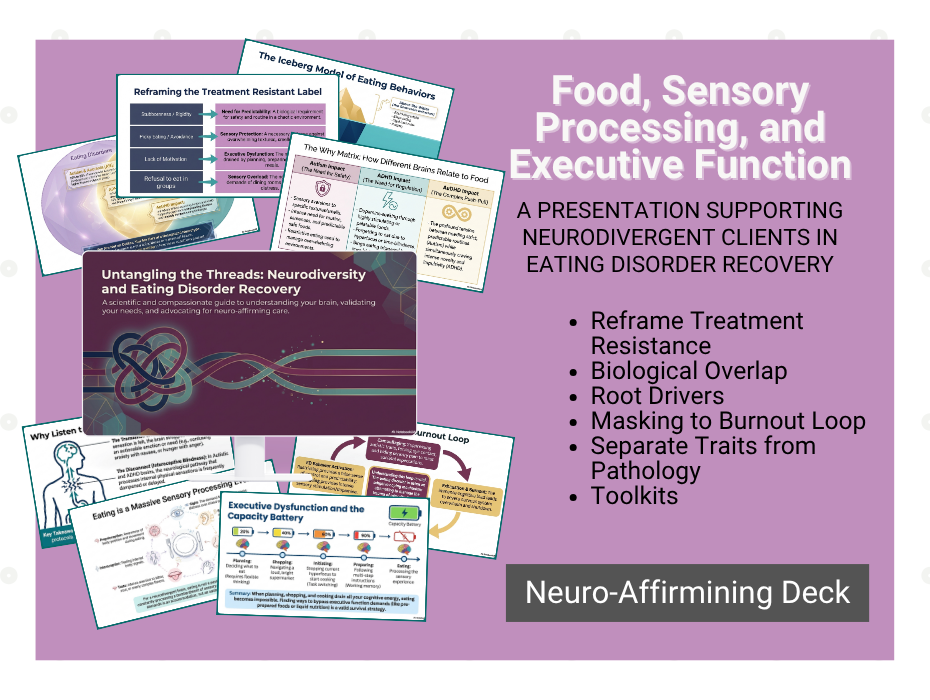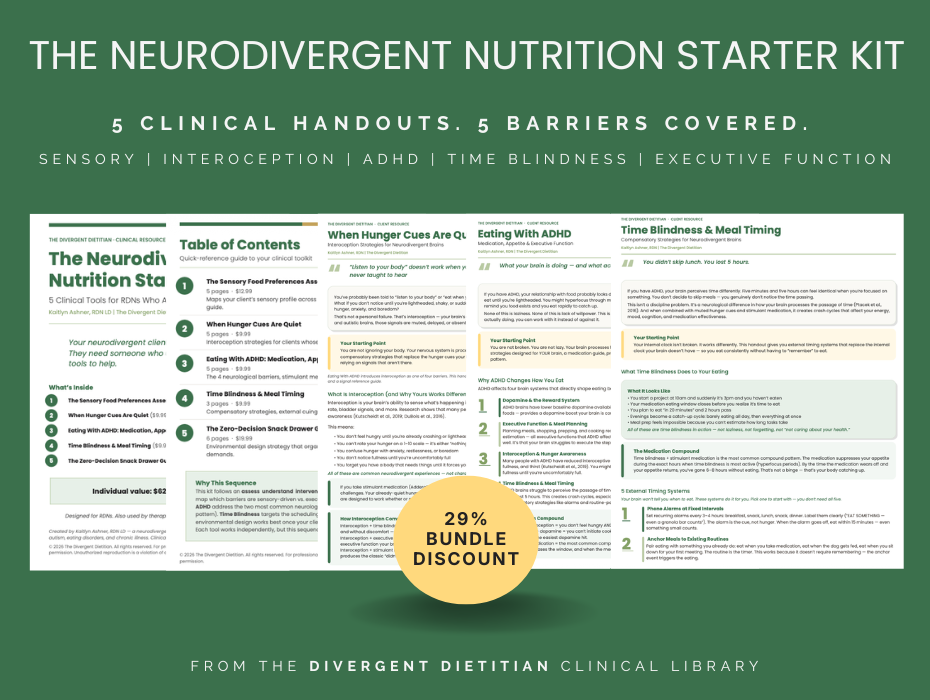

Many individuals experience strong reactions to the texture, smell, taste, or temperature of food. For people with sensory sensitivities, especially those with neurological differences such as autism or ADHD, these reactions can shape which foods feel safe, comfortable, or appealing to eat.
For dietitians and nutrition professionals, supporting these clients can be challenging. Traditional nutrition resources often focus on food groups or nutrients, which doesn’t always reflect how people with sensory sensitivities actually experience food. This can make it difficult to suggest foods that feel approachable for clients who have strong sensory preferences or aversions.
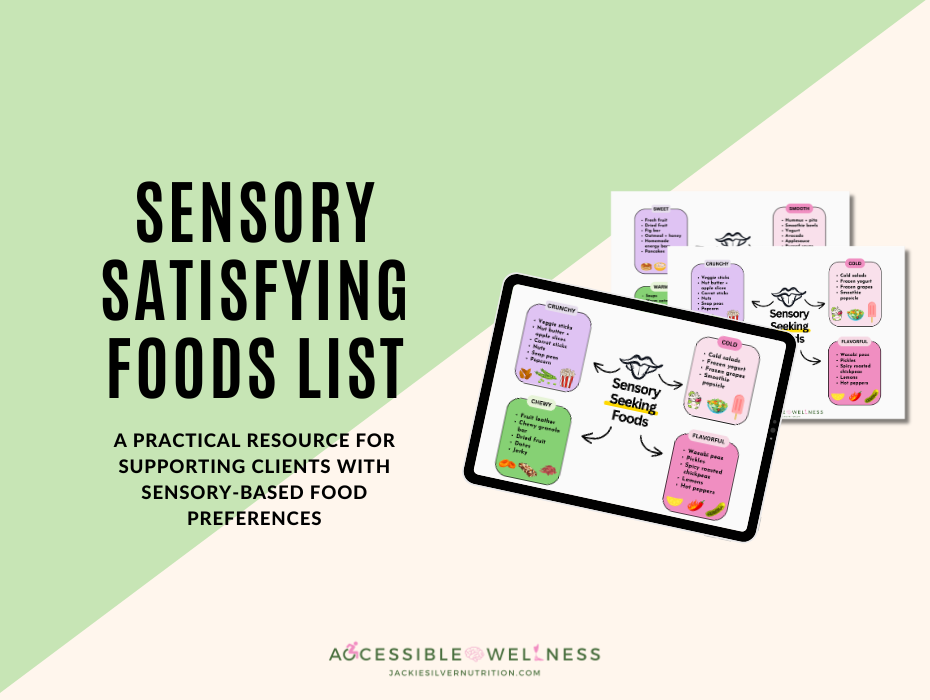
The Sensory Satisfying Foods List was created to make this process easier. This ready-to-use resource helps practitioners quickly identify foods that align with different sensory preferences, making it easier to support clients who are selective eaters, sensory avoiders, or sensory seekers. Instead of focusing on what someone should eat, this tool focuses on foods that are more likely to feel pleasant and satisfying from a sensory perspective.
Who This Resource Is For
This resource is designed for dietitians, nutritionists, therapists, and other healthcare professionals who support individuals with sensory-based eating patterns. It can be particularly helpful when working with:
- Individuals with ADHD
- Individuals with autism
- Clients with sensory processing differences
- Selective or picky eaters
- Clients who struggle with food aversions related to texture, temperature, or flavour intensity
The list can be used with kids, teens, or adults, making it a versatile tool for practitioners who work with neurodivergent clients or individuals with heightened sensory responses to food.
When to Use This Resource
The Sensory Satisfying Foods List works well in a variety of practice settings, including:
- One-on-one nutrition counseling sessions
- Feeding therapy or interdisciplinary care
- Brainstorming snack ideas during sessions
- Supporting clients who feel stuck with a limited number of “safe foods”
- Helping clients recognize patterns in their sensory preferences
Because foods are organized by sensory characteristics, the list can also help clients better understand why certain foods feel more appealing or more challenging.
What Makes This Resource Different
Most food lists categorize foods by food groups, but sensory preferences don’t always align with those categories. This resource takes a sensory-first approach, organizing foods based on characteristics that often influence food acceptance, such as texture, temperature, and flavour intensity.
This makes it easier for practitioners to generate food ideas that actually feel realistic and approachable for clients with sensory sensitivities.
What’s Included
This downloadable PDF resource includes:
- A visually organized sensory snack guide
- Foods grouped by sensory characteristics such as:
-
- Sweet
- Warm
- Smooth
- Creamy
- Crunchy
- Chewy
- Cold
- Flavorful
- A variety of snack and simple food ideas that can be used during sessions or shared with clients as a take-home resource
You must log in and be a buyer of this download to submit a review.