
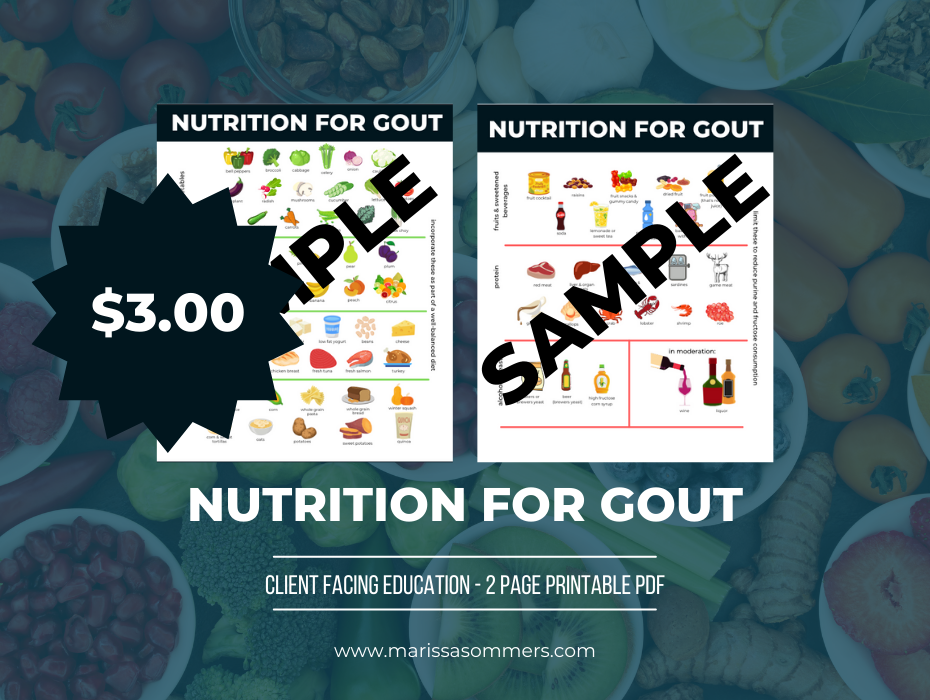
This unbranded two-sided handout provides essential information about a gout-friendly diet, offering colorful guidance on foods to include and those to avoid in order to manage and prevent gout flare-ups. It’s perfect for clients to post up on their fridge as a quick reference.
Foods to Eat:
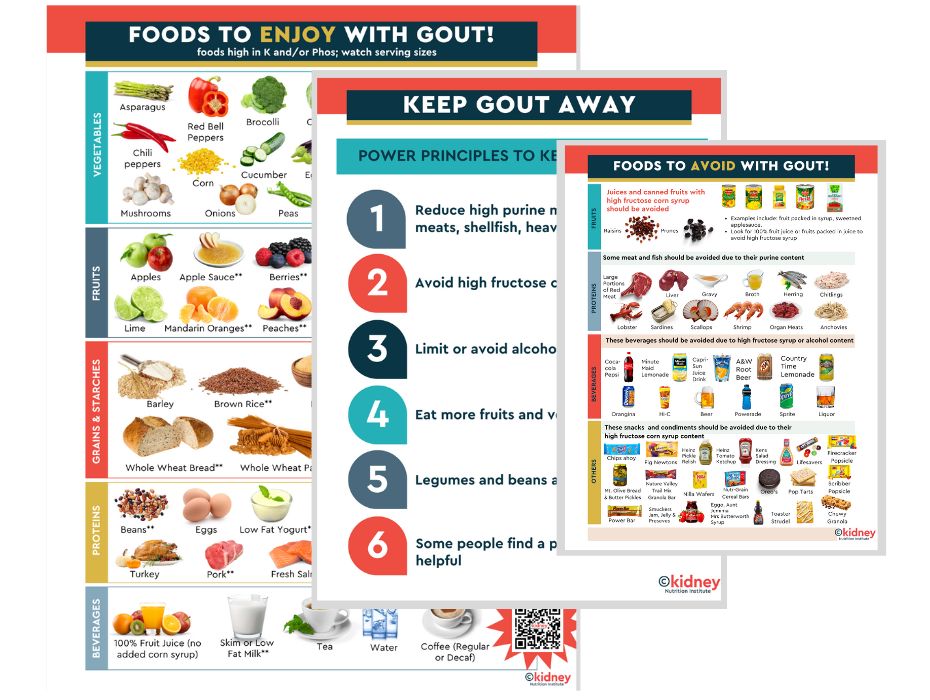
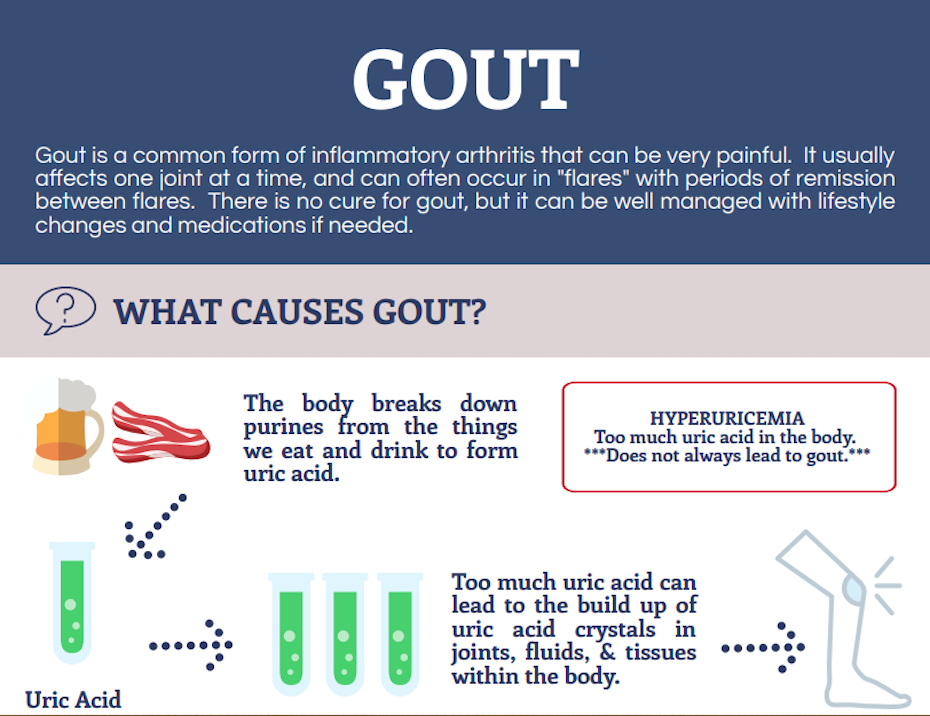
- Low-Purine Foods: Base your diet on foods low in purines, which break down into uric acid. These include:
- Fruits: Berries, cherries, apples, pears, and citrus fruits.
- Vegetables: Leafy greens, bell peppers, tomatoes, and cucumbers.
- Whole Grains: Oats, brown rice, quinoa, and whole wheat products.
- Dairy: Low-fat milk, yogurt, and cheese.
- Plant Proteins: Tofu, lentils, and beans.
- Nuts and Seeds: Moderation is key; opt for almonds, flaxseeds, and walnuts.
- Hydration: Drink plenty of water to help flush out excess uric acid from the body.
- Vitamin C: Incorporate vitamin C-rich foods like strawberries, oranges, and bell peppers, as they may help lower uric acid levels.
- Coffee: Moderate coffee consumption has been associated with a reduced risk of gout.
- Healthy Fats: Include sources of healthy fats, such as olive oil, avocados, and nuts.
Foods to Avoid/Moderate:
- High-Purine Foods: Minimize or avoid foods high in purines, which can contribute to elevated uric acid levels. These include:
- Organ Meats: Liver, kidneys, and sweetbreads.
- Red Meat: Beef, lamb, and pork.
- Seafood: Anchovies, mussels, scallops, sardines, and trout.
- High-Fructose Foods: Limit sugary beverages, fruit juices, and foods with high-fructose corn syrup.
- Alcohol: Reduce or avoid alcohol consumption, especially beer and spirits, as they can increase uric acid production and hinder excretion.
- Sugary Snacks: Cut down on sugary snacks and desserts, which can exacerbate gout symptoms.
- Processed Foods: Avoid highly processed foods with additives and preservatives
Remember, dietary changes alone might not completely prevent gout, but they play a crucial role in managing the condition and reducing the frequency and severity of flare-ups. Always tailor your diet to your individual needs and health status.
*these handouts are not a replacement for individualized medical advice*
You must log in and be a buyer of this download to submit a review.