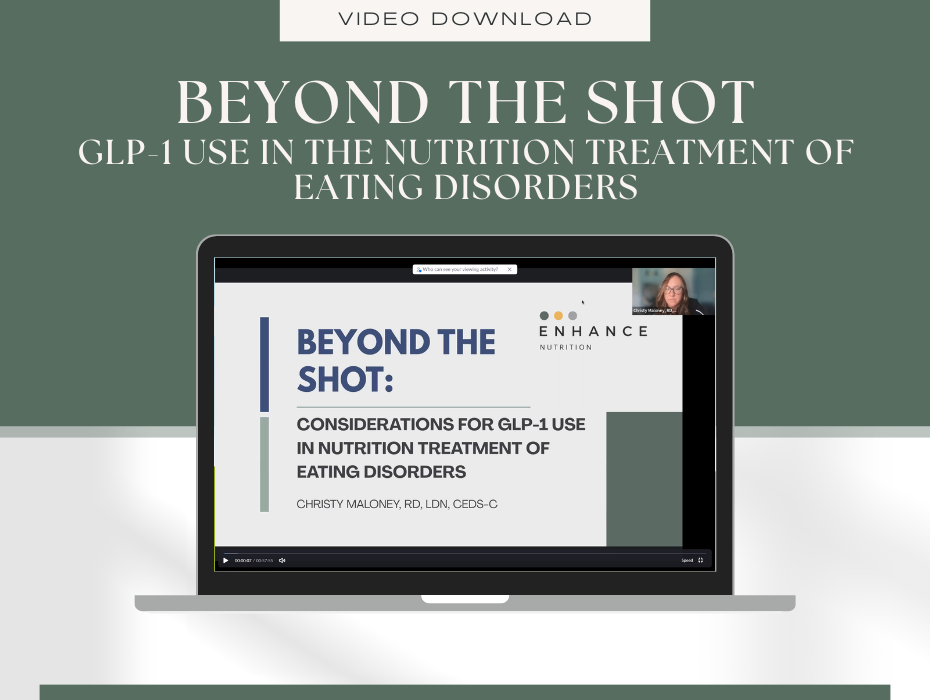

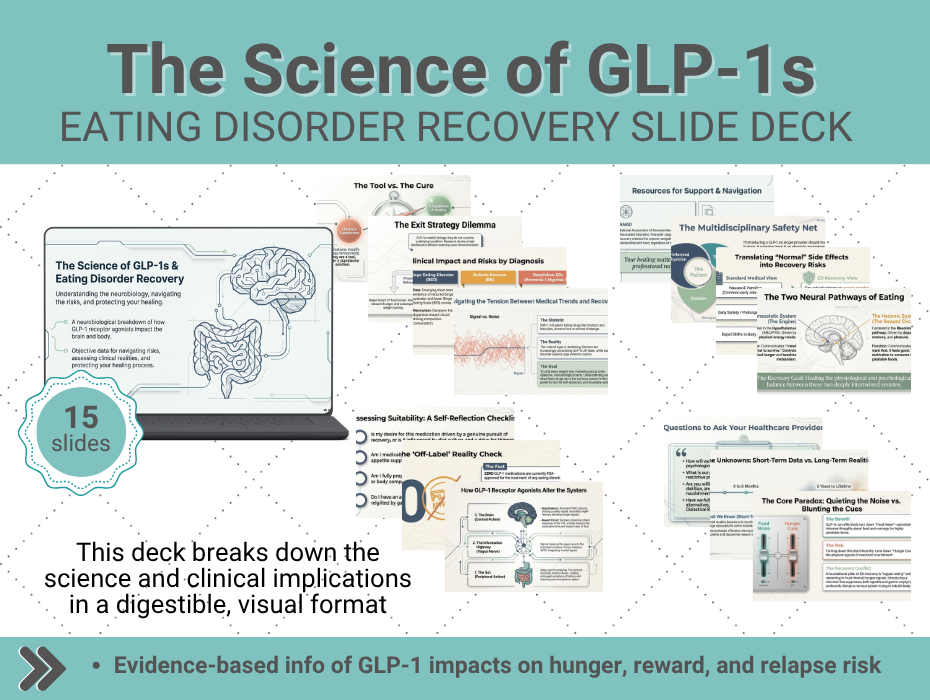
Supporting clients who are navigating GLP‑1 medications (such as Ozempic or Wegovy) during eating disorder recovery requires nuance, clarity, and a strong neurobiological framework. This 15‑slide, professionally designed PowerPoint deck gives clinicians a clear, client‑friendly way to explain why these medications can feel both helpful and destabilizing — often at the same time.
Designed for dietitians, therapists, and multidisciplinary ED teams, this resource translates complex brain‑based science into accessible visuals and metaphors you can use immediately in session.
What’s Included
- 15 professionally designed slides
- PowerPoint (.pptx) format
- Unbranded
- Not editable
- Client‑friendly metaphors and visuals
- Evidence‑informed explanations of GLP‑1 impacts on hunger, reward, and relapse risk
Key Teaching Metaphors – These metaphors help clients understand the neurobiology behind their experiences:
- The Double‑Edged Sword — How GLP‑1s can reduce binge urges while simultaneously increasing vulnerability to restrictive relapse.
- The Fuel Gauge — Why the hypothalamus may signal “full” even when the body still needs energy.
- The Chemical Volume Dial — How dopamine responses to food cues are turned down, quieting “food noise.”
- The Processing Lag — Why rapid physical changes can outpace the brain’s ability to update its internal body map.
- The Biological Rebound — Understanding post‑medication hunger as a predictable physiological response, not a personal failure.
Core Clinical Content – This deck breaks down the science and clinical implications in a digestible, visual format:
- The Neural Blueprint — Homeostatic vs. hedonic pathways and how GLP‑1s alter each system.
- The Intuitive Eating Conflict — Why chemical overrides make intuitive eating biologically challenging while the medication is active.
- Relapse Risk Considerations — Research‑informed insights on increased vulnerability for individuals with pre‑existing mental health conditions.
- The Side Effect Trap — How nausea, delayed gastric emptying, and other physical sensations can unintentionally reinforce ED behaviors.
- The Synthesis Matrix — A quick‑reference chart comparing GLP‑1 impacts across BED/BN and restrictive diagnoses.
- The Cessation Roadmap — A 3‑step framework for supporting clients through hunger rebound using mechanical eating and team‑based care.
- Clinical Non‑Negotiables — Protein targets, hydration guidance, and strategies to prevent under‑fueling.
How to Use This in Your Practice:
- Individual Sessions – Use slides to explain quieted “food noise,” prepare clients for hunger rebound, or clarify why certain urges intensify during medication changes.
- Group Therapy – Facilitate discussion around the “Double‑Edged Sword” metaphor to explore ambivalence and validate lived experience.
- Multidisciplinary Collaboration – Share visuals with prescribers or treatment teams to support coordinated, ED‑informed care.
- Patient & Family Education – Use the included case example to illustrate why unmonitored use can be risky for vulnerable populations.
Who This Is For:
- Registered dietitians
- Therapists and counselors
- Eating disorder treatment teams
- Health professionals supporting clients on GLP‑1 medications
Important Notes
- PowerPoint format only (.pptx)
- No Canva or Google Slides version included
- Does not contain facilitator notes
- For educational use; not a substitute for individualized medical or psychiatric care
About the Seller
With over 13 years of experience as a Registered Dietitian, I have specialized in eating disorder recovery across various levels of clinical care for more than six years. I am passionate about exploring the latest research to ensure every presentation I create is strictly evidence-based, providing you with the high-yield, practical tools needed to navigate complex recovery topics with confidence.
You must log in and be a buyer of this download to submit a review.