
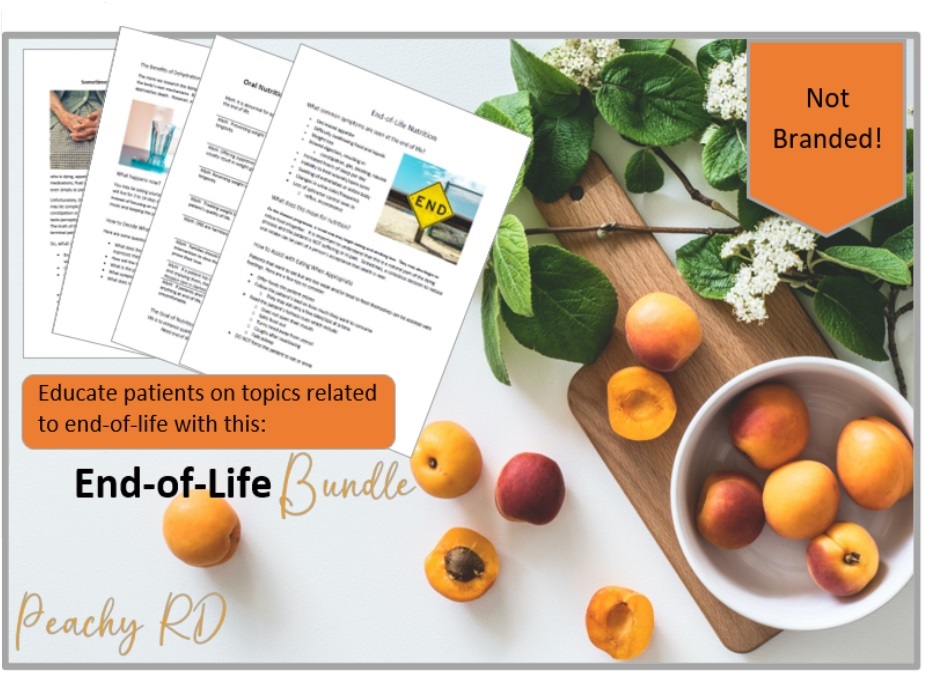
As a Hospice Dietitian, I play a key role in end-of-life discussions. Food is often seen as the last thread of hope families have regarding the life of their loved one. Common misconceptions are: ‘If they keep eating, they aren’t really dying.’ Or, ‘eating more will make them will live longer.’ Educating on these topics can be challenging but, also, very rewarding. These education materials were drafted to encourage discussion, offer education on what to expect and help reduce stress in the last days. One of these materials is made specifically for patients on tube feedings as these can be particularly complex. These handouts emphasis comfort as the ultimate goal and offer alternative ways for families to connect with the ones they love in the dying process. The patient education materials included in this bundle are: ‘Sometimes Unintended Weight loss is Okay’, ‘ONS at End-of-Life: Separating Myth from Fact’, ‘End-of-Life Nutrition’, and ‘End-of-Life Nutrition for TUBE FEEDINGS’.
Sometimes Unintended Weight Loss is Okay (1 page):
- An overview of how Hospice Dietitians differ from dietitians in other settings – Hospice Dietitians will not implement interventions to support weight gain. Our ultimate goal is comfort vs increasing calories.
- Why Does Weight loss Happen? – gives a general outline of physiological reasons for weight loss in the terminal patient. Begins the discussion that aggressive measures cause more harm than good.
- So What can families do? – offers alternative ways to connect that are not food-focused
ONS at End-of-Life: Separating Myth from Fact (1 page):
- A handy chart that has two columns: left column lists 9 common myths of oral nutrition supplements (ONS) use at end-of-life; right column offers facts about the limited benefits seen ONS use for terminal patients.
- This handout can be very helpful even for nursing staff!
End-of-Life Nutrition (2 pages):
- What are Common Symptoms Seen at End-of-Life? – lists nutrition-related symptoms to expect
- What Does This Mean for Nutrition? – educates families on the normal reduction in oral intake near end-of-life
- How to Assist with Feeding When Appropriate –
- Tips on how to feed someone
- A list of fullness cues to look out for
- Reminders to never force feed patients
- A few examples of easy foods to try
- But I feel like I am starving them… – reassures families that patients stop eating near end-of-life because their bodies can no longer digest the nutrition. This is a key message!
- Benefits of Dehydration in the Dying Process –
- Families often think more water is better but dehydration can have benefits in the end
- A list of physiological benefits to a dry terminal patient
- What Happens Now? –
- Outlines what the human body is capable of without food or water
- Gives practical suggestions for other ways to connect
End-of-Life Nutrition for TUBE FEEDINGS (2 pages):
- All the same sections from End-of-Life Nutrition are included in TUBE FEEDINGS except the following sections are tailored to tube feeding patients:
- What Does This Mean for Nutrition? – INSTEAD – What Does This Mean for Tube Feedings?
- How to Assist with Feeding When Appropriate – INSTEAD – How to Decide What is Best for Your Family
- What Does This Mean for Tube Feedings? –
- Educates families on the reason tube feedings that were previously tolerated are no longer tolerated near end-of-life
- A list of intolerance symptoms families can watch for
- How to Decide What is Best for Your Family – a bulleted list of questions they can sit down and discuss together regarding their loved one’s wishes for enteral nutrition
You must log in and be a buyer of this download to submit a review.