
Help Clients Eat More Consistently—Without Creating More Food Rules.
A practical meal-planning resource for dietitians who want structure without rigidity.
Meal planning can be complicated when your client has spent years dieting.
Too little structure can leave them overwhelmed.
Too much structure can quickly become another set of rules.
The Anti-Meal Plan gives dietitians a middle ground.
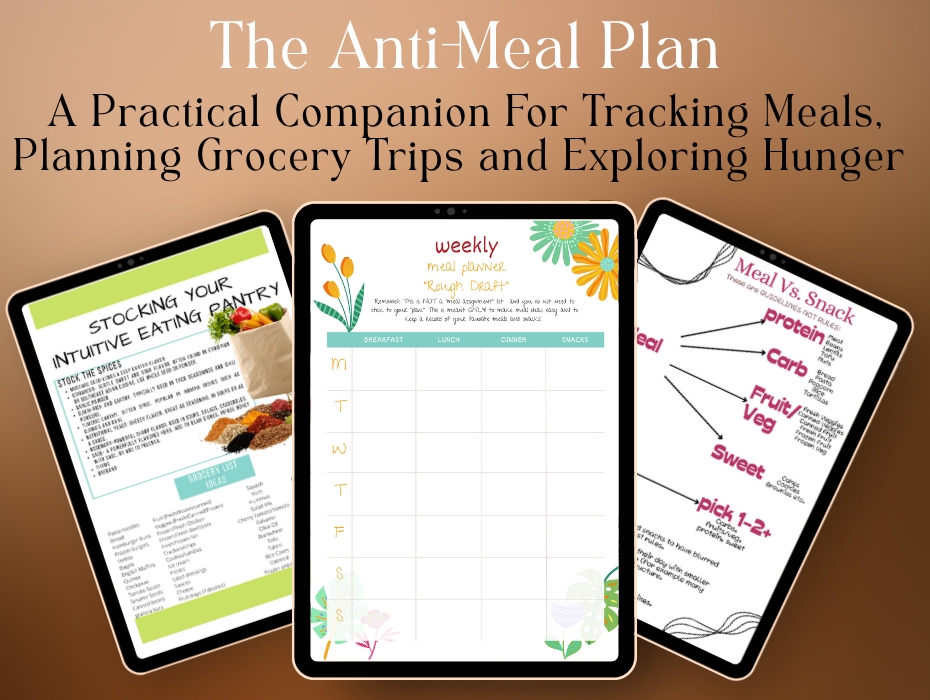
It’s a practical, flexible resource you can use with clients to make eating, grocery shopping, meal preparation, and keeping food available feel more manageable—without turning nutrition into another diet.
What’s Included
This resource combines practical meal support with reflection exercises to help clients build more flexibility and confidence around food.
Inside you’ll find tools for:
- Gentle meal and snack planning
- Meal and snack reflection
- Grocery planning and food inventories
- Keeping satisfying foods available
- Pantry and kitchen stocking
- Simple meal-prep strategies
- Easy food and meal ideas
- Packing satisfying lunches
- Hunger, fullness, and satisfaction exploration
- Food-rule and guilt reflection
- Cravings and food permission
- Body trust and body respect
- Gentle nutrition
- Food storage, leftovers, and reducing food waste
Who This Resource Is For
Designed for dietitians and other professionals supporting clients who need more structure around eating without another rigid meal plan.
It may be especially useful for clients navigating:
- Chronic dieting
- Disordered eating
- Eating disorder recovery
- Inconsistent eating patterns
- Food rules and rigidity
- Difficulty planning meals
- Grocery-shopping overwhelm
- Difficulty keeping enough food available
- Anxiety around deciding what or when to eat
How Clinicians Can Incorporate It Into Practice
Use the entire resource or pull out individual sections based on what your client needs.
Work together to plan meals and snacks.
Use the grocery tools to troubleshoot why food isn’t available when hunger hits.
Explore whether meal prep has become overly rigid—or feels so overwhelming that it isn’t happening at all.
Use reflection pages to identify food rules, guilt, satisfaction, hunger and fullness patterns.
Or assign individual exercises between appointments and revisit them together.
It’s designed to provide structure without turning that structure into another set of rules.
Suggested Uses
Use The Anti-Meal Plan to help clients:
- Establish more consistent meals and snacks
- Reduce the daily stress of figuring out what to eat
- Create flexible grocery lists
- Keep accessible foods available at home
- Develop realistic meal-prep routines
- Build more satisfying meals and snacks
- Pack lunches that actually meet their needs
- Explore hunger, fullness, cravings, and satisfaction
- Identify food rules interfering with eating
- Practice flexibility around meals
- Make nutrition feel more manageable in everyday life
Not Another “Perfect” Meal Plan.
This isn’t a prescriptive plan telling your client exactly what they need to eat Monday through Sunday.
And that’s the point.
The Anti-Meal Plan helps clients develop the practical skills that make feeding themselves easier while giving clinicians plenty of opportunities to explore what’s getting in the way.
Add The Anti-Meal Plan to your clinical toolbox and help clients build enough structure to support themselves—without creating another diet to follow.
You must log in and be a buyer of this download to submit a review.